Plush Toy Stuffing & Fill: The Complete Guide
What's actually inside a plush — fiberfill (virgin vs recycled vs HCS), pellets, glass & EPS beads, foam and natural fills — compared on feel, weight, washability, cost, plus the law label.

The fabric gets all the attention, but the fill is what your customer actually feels — and it quietly decides the weight, the squish, the springback, the washability, the cost and half the safety profile of a plush. Most guides cover “fiberfill” and stop. This one covers every fill there is, compares them honestly, maps each to the right product, and explains the tag on the seam that trips up first-time US importers.
Why fill is the most underrated spec
Two plush with identical fabric can feel completely different inside. Fill sets whether a toy is light and lofty or dense and weighted, whether it springs back or stays dented, whether it's machine-washable or spot-clean only. Get it wrong and a premium shell feels cheap; get it right and a modest design feels luxurious.
Fiberfill: virgin vs recycled vs HCS
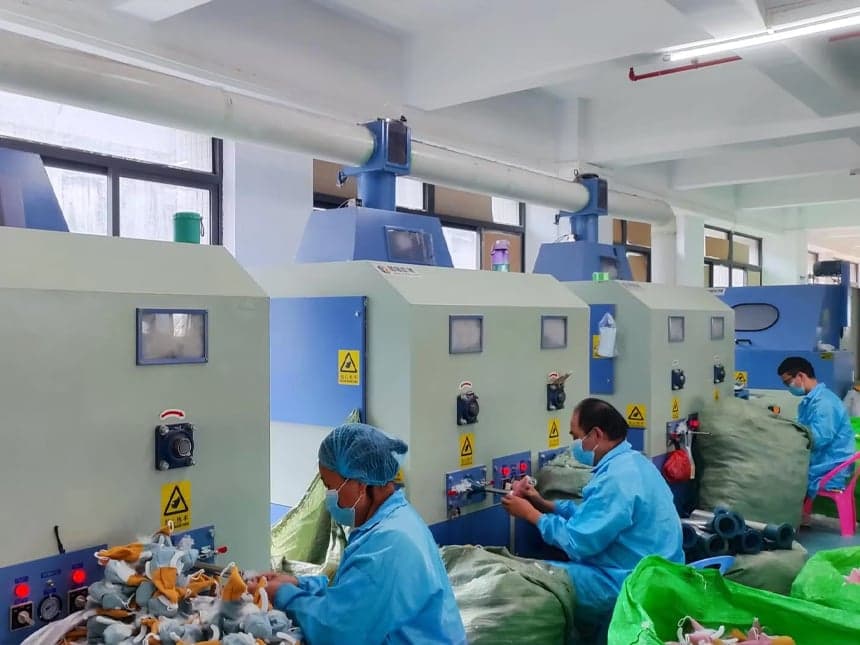
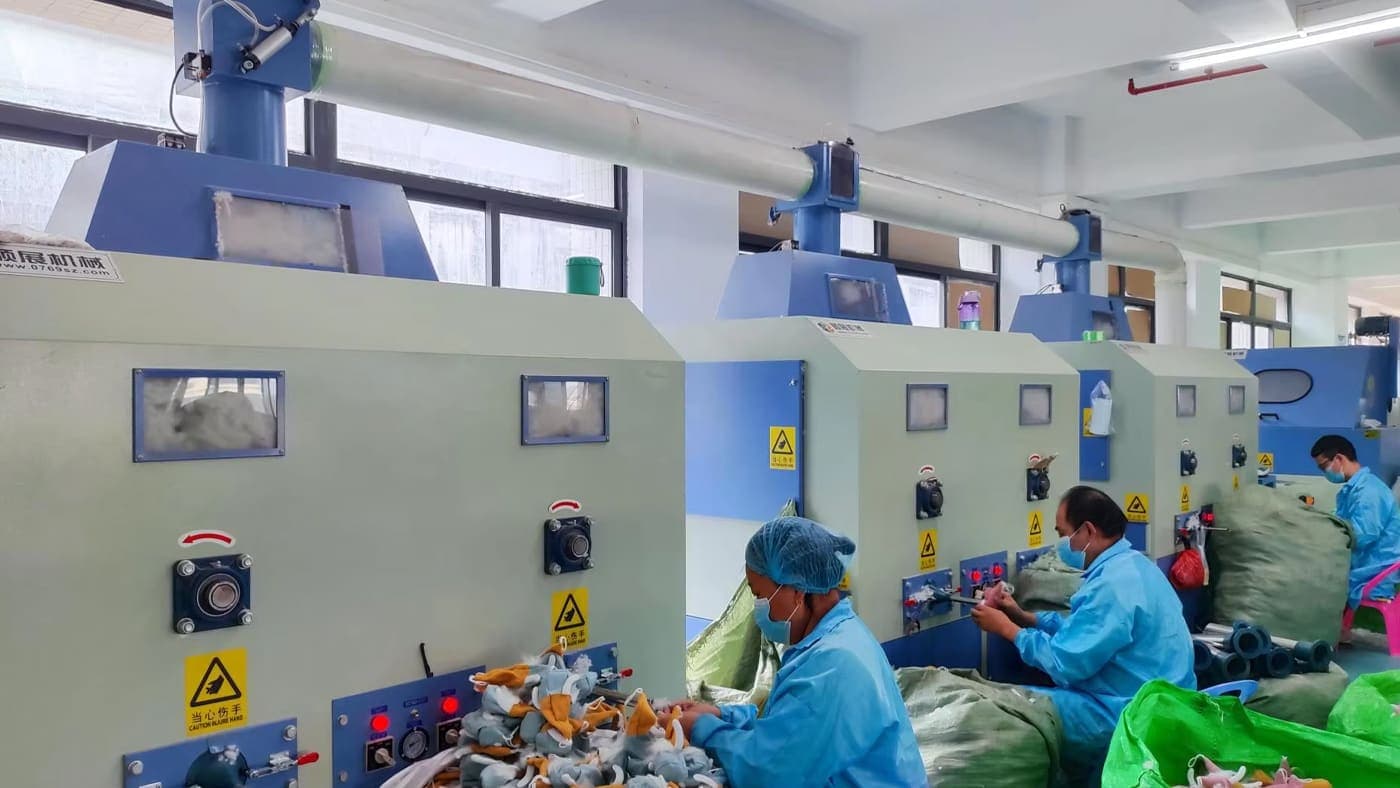
The default fill is crimped polyester fiberfill — soft, lightweight, hypoallergenic, washable. (Trade jargon calls it “PP cotton,” but the fiber is polyester/PET, not polypropylene.) The nuance that competitors get wrong: “virgin is better” is an oversimplification. What actually drives loft and resilience is the fiber grade, not its origin. Hollow Conjugated Siliconized (HCS) fiber — a hollow core, a 3D spiral crimp, and a silicone finish that stops it bunching — delivers the springback, and high-grade recycled HCS can match virgin on loft and durability. The lumpy reputation of “recycled” comes from cheap, short, non-siliconized reclaimed fiber — so spec the grade, not just the word.
Weight: plastic pellets vs glass beads
To add weight, posability or a beanbag feel, you reach for granular fill. Plastic (PP/PE) pellets are the budget route — washable, non-toxic, good for sitting/posing toys (never dry-clean them; solvents degrade plastic). For weighted comfort plush, glass microbeads are the premium choice: roughly 2.5× denser than plastic pellets, so far fewer beads hit the target weight, giving a smoother, quieter, more even weight. Both must be inner-baggedso they can't escape. The full weighted build is in our weighted & sensory plush guide.
Squish: EPS beads & foam
For the flowing, moldable squish of a marshmallow-style plush, EPS (expanded polystyrene) microbeads are the fill — extremely light, they conform and flow inside the shell. Memory foam (viscoelastic) contours slowly and adds weight; shredded polyurethane foam is chunky, springy and moldable for structured cushions. The squish-pillow application is covered in our plush pillow guide.
Natural & specialty fills
Premium, eco and sensory products reach for natural fills. Wool is breathable, resilient and temperature-regulating (heavier, pricier). Cotton is soft and natural but heavier and prone to clumping. Kapok is a light, buoyant, water-resistant down alternative — with one important caveat: it's very flammable, so it needs care for toys. And buckwheat hulls and grain(wheat, flaxseed) are the firm, heat-holding fills behind warming and sensory plush — they can't get wet without spoiling.
The master comparison
| Fill | Feel | Weight | Washable | Cost | Best for |
|---|---|---|---|---|---|
| Virgin PP fiberfill | Soft, lofty | Light | Yes | $ | Standard toys |
| Recycled HCS fiberfill | Soft, lofty | Light | Yes | $–$$ | Eco toys (matches virgin) |
| Plastic pellets | Beanbag, posable | Medium | Yes (no dry-clean) | $ | Sitting/posable toys |
| Glass microbeads | Smooth, dense | Heavy | Often (inner bag) | $$$ | Weighted comfort plush |
| EPS microbeads | Flowing squish | Very light | Limited | $$ | Marshmallow/squish |
| Memory foam | Slow, contouring | Heavy | Limited | $$$ | Support pillows |
| Shredded foam | Chunky, moldable | Heavier | Limited | $$ | Structured cushions |
| Wool | Breathable, resilient | Heavier | Careful | $$$ | Premium / natural |
| Kapok | Light, buoyant | Very light | Careful | $$$ | Eco (flammable — care) |
| Buckwheat / grain | Firm, molded | Heavy | No (keep dry) | $$ | Warming / sensory |
Choosing fill by product
| Product | Recommended fill |
|---|---|
| Standard huggable toy | HCS polyester fiberfill |
| Posable / sitting toy | Fiberfill + plastic pellets |
| Weighted / calming plush | Glass microbeads (or pellets) |
| Marshmallow / squishy | EPS microbeads |
| Pillow / comforter | HCS fiberfill or shredded foam |
| Warming / sensory | Buckwheat / grain |
| Premium / eco line | Wool or kapok |
- 1What feel?Soft / posable / squishy / weighted
- 2Must it wash?Fiberfill/pellets yes; grain/foam no
- 3Weighted?Glass beads (smooth) / pellets (budget)
- 4Eco priority?Recycled HCS / wool / kapok
- 5Spec the gradeHollow, conjugated, siliconized
Safety & the US law label
Two safety layers. First, the build: clean, new (or certified-recycled) fill only — never dirty rags — with needle/metal detection on every unit, secure seams so fibers can't be pulled out and inhaled, and inner-bagged pellets/beads. It's all part of ASTM F963 / EN 71 compliance. Second, the part importers miss: the law label. Several US states (Pennsylvania, Ohio and Massachusetts) register stuffed toys and require a sewn-in label disclosing the filling content and the maker's registry number — a consumer-protection rule born to stop hidden secondhand stuffing. (Pennsylvania's 2024 update now permits disclosed recycled material, where it once effectively required all-new.) The eco side is in our eco & sustainable plush guide.
Spec the right fill
Tell us the feel and use case and we'll spec the fill grade, the weight, the containment and the right law label for your market. Start on our contact page, request a sample, or read our fabric & materials guide for the outside.
Questions fréquentes
What are plush toys stuffed with?
Is recycled stuffing lower quality than virgin?
What's the best stuffing for a plush toy?
Why do stuffed toys have a tag about the filling (the 'law label')?
Are stuffing pellets and beads safe for kids?
Prêt à créer votre propre peluche personnalisée ?
Décrivez-nous votre projet — recevez un devis direct usine sous 1 heure ouvrée.