Manufacturing Anime & Licensed Character Plush: IP, Accuracy & Anti-Counterfeiting
What a real factory needs before it makes character plush: the license, the licensor approval workflow, color-accurate decoration, anti-counterfeit tags and toy safety.

Search “custom anime plush manufacturer” and every result sells you production speed and “99.8% accuracy” — and not one of them mentions the thing that gets brands sued and batches seized at customs: you need a license to make character plush. This is the article those pages won't write: the legal reality, the licensor approval gates, how accuracy is actually achieved, and how a serious factory protects an IP owner instead of pirating them.
The hard truth: you need a license to make character plush
A fictional character is protected by both copyright and trademark — copyright covers the original artwork and design, trademark covers the names and logos. Manufacturing plush of Pikachu, Hello Kitty or any anime property without authorization infringes both. Fan art and doujin live in a toleratedgrey area for small, non-commercial fan activity; that tolerance is not a license, and it evaporates the moment you produce for resale. A factory worth working with will ask to see your license before it samples licensed IP — and decline if you don't have one. If the character is your own original creation, none of this applies and we can build it freely.
How character licensing actually works
A license is a formal grant from the rights-holder (or their licensing agency) that spells out the territory, the term, the approved product types and the royalty. Toy and merchandise royalties commonly run in the region of 2–7% of wholesalefor typical properties, higher for red-hot IP — treat any figure as a range, not a quote. To win a license you usually need a credible business, a product portfolio and a marketing commitment; licensors pick partners who'll represent the brand well. International copyright is automatic on creation under the Berne Convention (see WIPO), so you can't assume an older or foreign character is “free.”
The licensor approval & sampling workflow
Licensed manufacturing isn't straight-through production — it's a series of approval gates, each one a place the licensor can say “not yet.” Build these cycles into your timeline:
- 1Secure the licenseTerritory, term, products, royalty
- 2Style guide issuedThe licensor's master art & color spec
- 3Concept / art approvalYour plush design, on-model
- 4Development sampleFirst 3D interpretation
- 5Pre-production sampleBuilt with real bulk materials, sent to licensor
- 6Color approvalStrike-offs vs the brand guide
- 7Sign-off → bulkUnapproved changes can void the license
Style-guide tolerances are tight: facial and embroidery placement drifting outside the guide can get a whole mass-production batch rejected, which is why in-hand audits against the master guide are standard before a run ships. For the underlying design document, see our tech-pack guide and the wider manufacturing timeline.
Accuracy to the source art: color & on-model fidelity
Fandom acceptance is unforgiving — the silhouette has to be instantly recognizable, the eyes and expression have to feel right, and the colors have to sit on-model. We spec everything in Pantone (PMS)references and run physical color strike-offs for your approval before bulk. One honest caveat we put in writing: sublimation prints in CMYK process, so a handful of Pantones simply can't be hit perfectly — which is exactly why color is confirmed on a real sample, not promised as a number.
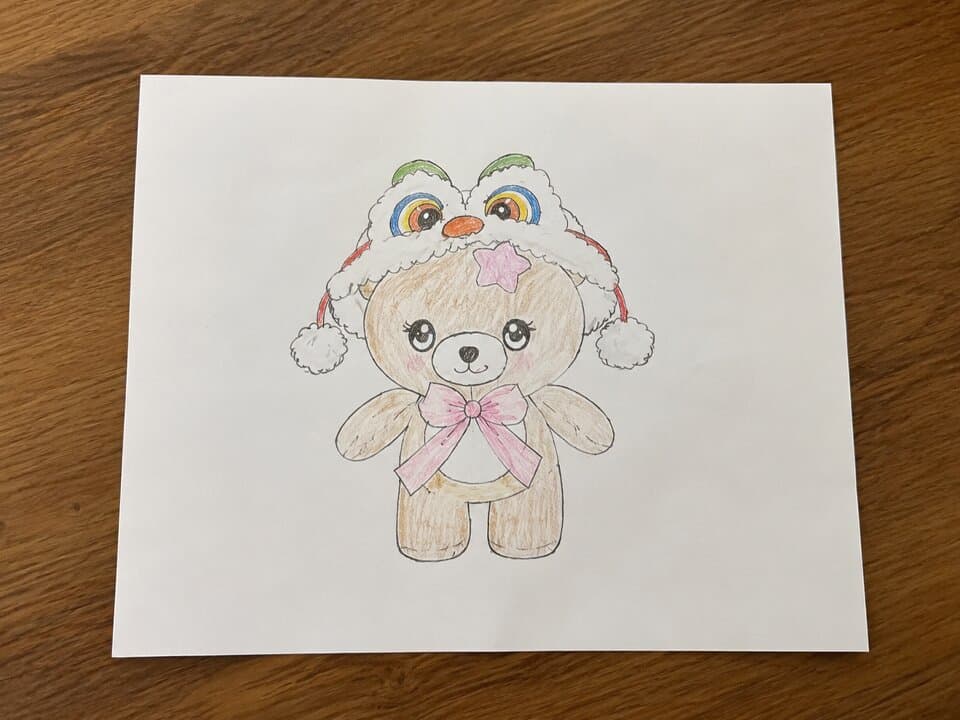
Embroidery vs sublimation vs hybrid for anime faces & hair
Anime characters demand sharp color zones, hair and eye gradients, and fine facial detail — which is precisely where the decoration method decides whether the plush looks official or bootleg:
| Method | Best for | Limitation | Typical use |
|---|---|---|---|
| Dye-sublimation print | Gradients, large flat color fields, intricate face art | Polyester only; CMYK can't hit every Pantone; flatter feel | The face & detailed art |
| Embroidery | Crisp outlines, logos, durable tactile detail | No true gradients; fine lines/text below ~4 mm blur | Outlines, accents, logos |
| Appliqué | Big bold color blocks | Not for fine detail | Large shapes & panels |
| Hybrid (recommended) | Faithful, durable character plush | More setup | Printed face + embroidered outlines |
For vibrant characters we lean on soft, color-true minky/velboa and OEKO-TEX-grade materials; the full menu is in our fabric & materials guide. MOQ for licensed programs varies widely — roughly 50–100 pcs at low-MOQ shops, 300–500 pcs per style as a more typical commercial floor, and far higher for major launches.
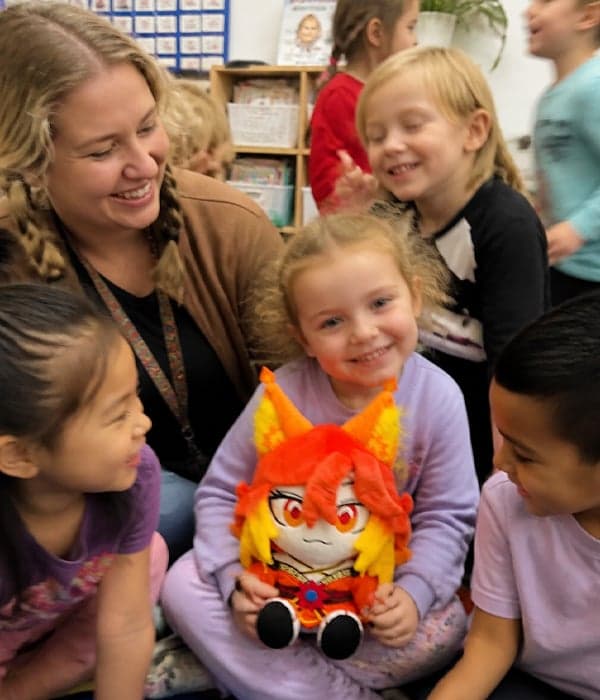
Anti-counterfeiting & authentication
Protecting the licensor's IP is part of the job, not an add-on. Licensed plush programs typically carry anti-counterfeit and authentication features so genuine product is distinguishable from bootlegs:
- Holographic or embossed authentication tags, often serialized.
- QR / serialized codes that verify a unit against the brand's register.
- Sewn-in labels & swing tags carrying the licensee name, model number and required legal marks.
- Controlled tooling & patterns— an ethical factory doesn't re-run a licensed mold for a grey-market third party.
Still a toy: safety & compliance
Character plush are bought and held by fans of every age, including children, so they're regulated as toys. In the US that means ASTM F963 under the CPSIA — flammability, lead under 90 ppm in accessible parts (including plastic eyes and printed coatings), small-parts and pull tests, third-party lab testing, a Children's Product Certificate and a tracking label. In the EU it's EN 71 plus CE marking, with EN 71-3 controlling more elements than ASTM. Missing those documents is a customs-seizure risk on top of the IP one. The detail lives in our safety standards guide.
Make licensed plush the right way
Whether you hold a license or you're building an original character, send us the style guide or your artwork and we'll handle approval-ready sampling, color strike-offs, authentication and full ASTM F963 / EN 71 certification. Start on our contact page, request a sample, or see licensed work in our customer case portfolio.
Frequently asked questions
Can you make a plush of any anime character for me?
What's the difference between fan art / doujin and a real license?
How does licensor approval work, and how long does it add?
Embroidery or printing for the character's face?
Can you guarantee the colors exactly match the official art?
Ready to make your own custom plush?
Tell us what you're planning — get a factory-direct quote within 1 business hour.