Custom Plush Toy Manufacturing: The Real 30-Day Sketch-to-Delivery Timeline (2026)
Day-by-day breakdown of how a custom plush toy goes from sketch to sealed export carton — sampling, mass production, QC, shipping, and the 5 delays that actually move your timeline.

When buyers ask 'how fast can you make a custom plush toy?' the honest answer has three parts: 30 days is achievable, 35 is more realistic, and anyone quoting 20 is either ODM-rebranding or skipping QC. This is a day-by-day breakdown of what actually happens between approving a sketch and a sealed export carton, drawn from 1,200+ projects shipped from our Shenzhen factory.
The realistic 30-day clock
A 30-day sketch-to-delivery is genuinely possible — but only on a simple-to-mid-complexity SKU, with one round of sample revisions, with materials in stock, and with an efficient air-freight leg. Add a single complication (Pantone fabric match, 3 sample rounds, mid-run BOM change, sea-freight from Shenzhen to LA) and you're looking at 35–55 days. The schedule below is the lean path; the ranges in parentheses are the typical reality.
Industry-wide benchmarks for custom plush production sit around 25–40 days from design approval, before sea freight. The Toy Association's annual production survey confirms this band. The Shenzhen-to-Long Beach sea leg adds 14–18 days; the Shenzhen-to-Hamburg leg adds 28–35 days. Air freight cuts that to 3–5 days but multiplies the per-unit shipping cost roughly 8x.
Day-by-day breakdown of a 30-day plush program
The numbers below assume a 25-cm bear-format plush with embroidered features, 1 sample round, fabric available in our warehouse, and air freight to a US port. Adjust upward for any variance.
| Stage | Days | What happens | What gates the next stage |
|---|---|---|---|
| Inquiry & brief | Day 1–2 | Buyer submits sketch, target qty, packaging requirement; factory acknowledges scope, BOM and quote draft. | Signed quote + 50% deposit |
| Design & quote refinement | Day 2–5 | In-house design team produces tech pack: 2D pattern, fabric specs, accessory list, Pantone references. | Buyer approves tech pack |
| Sampling | Day 5–12 | Pattern table cuts master pattern; sewer constructs first sample; embroidery + finishing; photo + ship sample. | Buyer approves physical sample |
| Mass production | Day 12–22 | Bulk fabric requisition; cut-and-sew lines staffed; rolling QC at three checkpoints; stuffing and finishing. | AQL inspection passed |
| QC + packing | Day 22–26 | Third-party AQL 2.5 visual / 4.0 minor inspection; polybag + hangtag; master carton labelling. | Inspection certificate issued |
| Export & shipping | Day 26–30 | Customs filing; container loaded; air-freight handover (or sea freight booking). | Bill of Lading delivered |
The handoff diagram
Each block is a hard handoff — the next stage doesn't start until the previous one is signed off. This is what protects both sides from late-stage surprises.
- 1Inquirysketch + target qty
- 2Design + quote2-3 days
- 3Sampling7-10 days
- 4Mass production10-12 days
- 5QC + AQL3-4 days
- 6Export packing1-2 days
- 7Shippingair 3-5d / sea 14-35d
Days 1–2: Inquiry, brief, and BOM lock
The most leveraged 48 hours of the entire program. We need: the sketch (PNG/AI/PDF — anything legible), target quantity, packaging requirement (polybag or retail box), destination market (US/EU/CA changes the test list), and target landed cost. The tighter the brief, the fewer revision rounds. Vague briefs are the #1 reason 30-day programs become 45-day programs.
Days 2–5: Design, tech pack, quote
Our design team translates the sketch into a tech pack: 2D pattern with seam allowances, fabric weight + pile depth specs, accessory list (eyes, embroidery thread, satin bow), Pantone references, sewn-in label artwork, and packaging die line. The quote refresh at this stage uses the locked BOM, not the inquiry estimate — which is why the inquiry quote is non-binding.
Days 5–12: First sample
Pattern table cuts a master pattern; one of our 4 sample tailors hand-stitches the first physical sample; embroidery floor adds face details; finishing adds tag and accessories. We photograph from 6 angles and overnight a physical sample. Buyers usually request one revision round (Pantone shift, fill density tweak, eye placement) — we plan for that. Two revisions push the schedule to 35 days; three pushes to 40+.
Days 12–22: Mass production
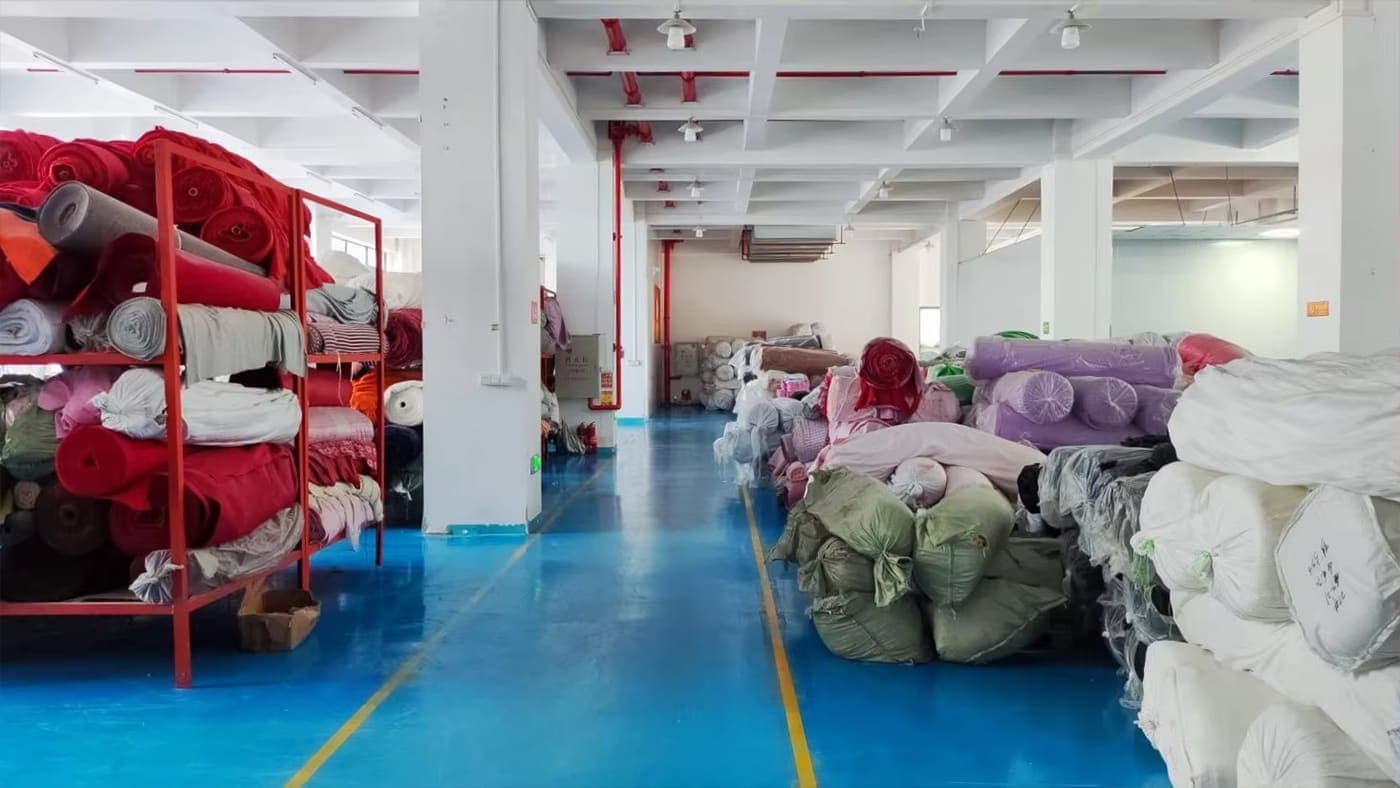
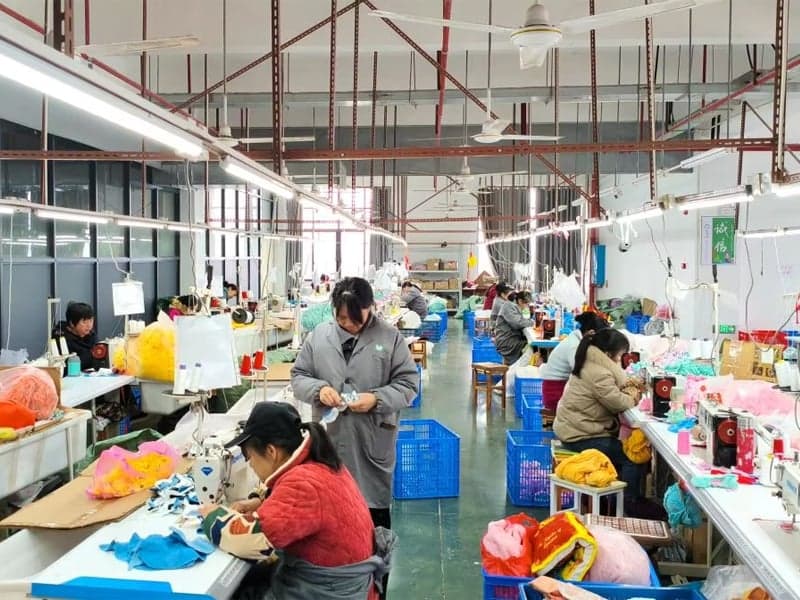
Once the sample is signed, bulk fabric is requisitioned from inventory or cut from new rolls; the cut-and-sew lines are staffed; QC inspectors run rolling checks at three checkpoints (post-cut, post-sew, post-stuff). The 10-day mass-production window assumes a 1,000-unit run on a single SKU. Multi-SKU runs share lines but add 1–2 days for changeovers.
Days 22–26: AQL inspection + retail packing
Third-party inspectors (we work with SGS, Bureau Veritas, Intertek) run AQL 2.5 visual / 4.0 minor on a randomised sample. Failed cartons are pulled and reworked. Passed cartons get polybagged with the country-specific suffocation warning, hangtagged with the buyer's brand artwork, then loaded into master cartons with shipping marks. SGS, Bureau Veritas and Intertek are the inspectors we work with.
Days 26–30: Export documents and dispatch
Customs filing, commercial invoice, packing list, country-of-origin certificate, CPC (US) or DoC (EU). Container loaded at the factory door. For air freight, the carton handover happens day 26–28; cargo arrives at destination day 28–30. For sea freight, the carton handover is the same but the timeline extends by the sea leg length.
Shipping: air vs sea vs DDP
Same factory, same carton, three very different cost / time profiles. This is the trade-off table we walk every new buyer through:
| Mode | Time (Shenzhen → US) | Cost (USD/kg, plush) | When to use |
|---|---|---|---|
| Air freight (FOB) | 3–5 days | $5.50–$8.00 | Pre-launch / sample replenishment / e-com restock |
| Sea freight LCL | 22–35 days | $0.85–$1.40 | Sub-1 CBM consolidation, low-volume programs |
| Sea freight FCL | 16–24 days | $0.55–$0.95 | Full container, 5,000+ units, retail launch |
| DDP express (door) | 7–12 days | $3.20–$5.00 | Mid-volume e-commerce, fastest with no broker |
Logistics references: Maersk shipping, DHL Freight, US CBP import basics.
What actually slows you down
From 1,200+ projects, the five most common delay sources, ranked by impact:
- Late sample approval — the buyer's internal sign-off chain is the #1 schedule risk. We've seen samples sit unanswered for 11 days.
- Pantone-match fabric out of stock at the mill (adds 5–8 days of dye-lot lead time).
- Mid-run BOM change — switching fabric, fill or accessories voids the lab report and forces re-testing.
- Customs delays at destination — US Long Beach can hold containers 7–14 days during peak season; EU Hamburg can add 5–10.
- Force-majeure events: typhoon season at Shenzhen port (June–October) can add 2–5 days to vessel scheduling.
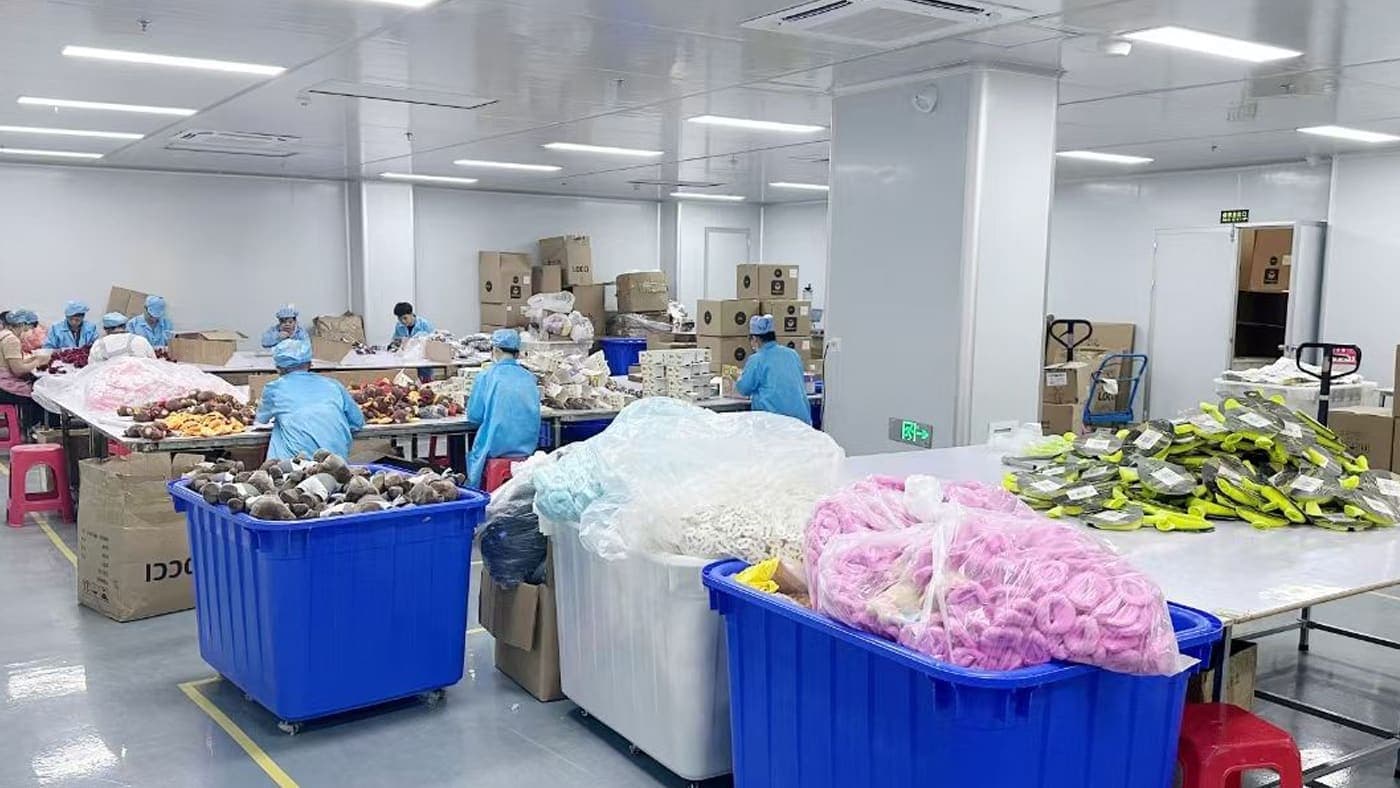
Inside a real production run
30-second walkthrough of the cut-and-sew, embroidery and QC stations as they look during an active run.
Lead times, by the numbers
Build the schedule, then defend it
30 days is a tight target — but it's not magic. It's a well-defended brief, a single sample revision, a known BOM, and a port that isn't on fire. The single biggest thing you can do as a buyer is to compress your internal sample-approval chain. Every day you take to approve costs the program two days at the back end (because the line has been re-allocated).
Want to scope a 30-day plush program against your real specs? Our OEM service page walks through the full process. Browse current customer cases to see comparable timelines we've shipped against.
Frequently asked questions
What does a real 30-day custom plush toy production timeline look like?
How long does plush sampling really take from sketch to physical sample?
Which step in custom plush manufacturing causes the most delays?
How does StarDream Toys ensure on-time delivery for custom plush orders?
Can custom plush production be expedited below 30 days?
Ready to make your own custom plush?
Tell us what you're planning — get a factory-direct quote within 1 business hour.