Custom Plush Keychains & Mini Plush: The Complete Manufacturing Guide
Sizes, the keyring & clasp hardware no one explains, why tiny faces lose detail and how factories fix it, MOQ economics, blind-box packaging and the safety promo plush still needs.

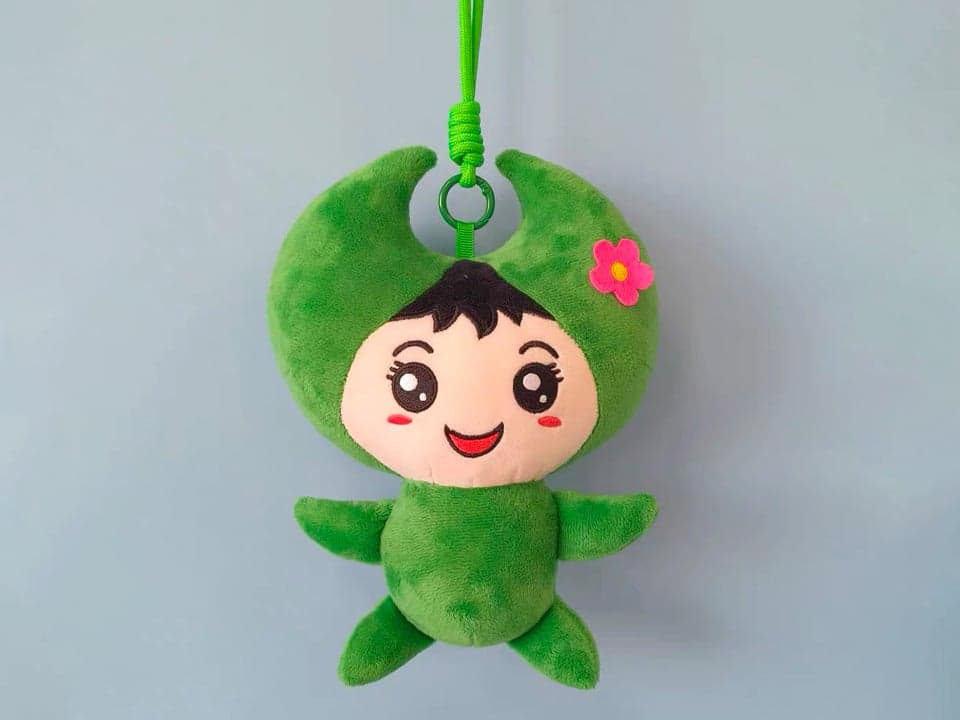
Mini plush and plush keychains punch far above their size: cheap enough to be an impulse buy, collectible enough to drive blind-box hype, and small enough that a brand can give thousands away. But shrinking a plush is its own engineering problem — the hardware, the detail loss at small scale, and the MOQ maths all behave differently than they do for a full-size toy. Here's the complete sourcing guide, including the parts most supplier pages skip.
Why mini & keychain plush sell so well
They sit at the sweet spot of price and emotion. As anime / IP merchthey ride a character's fanbase; as brand promo and event giveawaysthey're a tactile keepsake people actually keep; as gacha / blind-boxcollectibles they turn randomness and “chase” variants into repeat purchases; and at retail they're the classic impulse buy by the till. For the broader promo angle, see our branded promotional plush guide.
Sizes & proportions: getting mini plush right
“Keychain plush” covers a real range. The smaller you go, the more you trade detail for cuteness and cost. A practical taxonomy:
| Class | Size | Best for | Detail you can hold |
|---|---|---|---|
| Micro | ≤5 cm | Capsule / gacha, zipper charms | Silhouette only — minimal features |
| Mini (sweet spot) | ~7–10 cm | Keychains, bag charms, blind-box | Embroidered eyes + a few bold details |
| Small | ~11–15 cm | Clip-on charms, premium merch | Comfortable detail, multiple colours |
| Charm-large | ~16–20 cm | Statement bag charms, plush + clip | Near full-size detail |
Our rule of thumb: ~10 cm is the floor for a detailed design. We can build down to 7–8 cm, but below that the body becomes mostly seam and the face has room for little more than eyes.
Attachment hardware options
This is the section every competitor hand-waves — yet it's the first decision that changes how your product feels and what it costs. The hardware attaches to a sewn-in fabric loop or twill tab anchored into a seam (the part that gets pull-tested). Your real choices:
| Hardware | How it works | Best use | Cost tier |
|---|---|---|---|
| Split ring (key ring) | Double-looped spiral ring on a fabric tab | Actual keys — most secure | $ |
| Lobster / swivel clasp | Spring-gated clasp, often on a swivel | Bag charms & merch — clip on/off (most popular) | $$ |
| Ball chain | Beaded metal chain | Soft pillow-style charms, gacha | $ |
| Carabiner / snap hook | Large spring-gate clip | Backpacks, sporty look | $$$ |
| D-ring + strap tab | Sewn strap ending in a ring | When the strap is part of the design | $$ |
Designing for tiny faces: the detail-loss problem
Shrink a design and its fine elements fall below what stitching and cut-and-sew can resolve: thin outlines can't hold, small appliqué frays, and adjacent colours merge. A full-size character and its 10 cm keychain are not the same artwork — the mini has to be re-drawn for the medium:
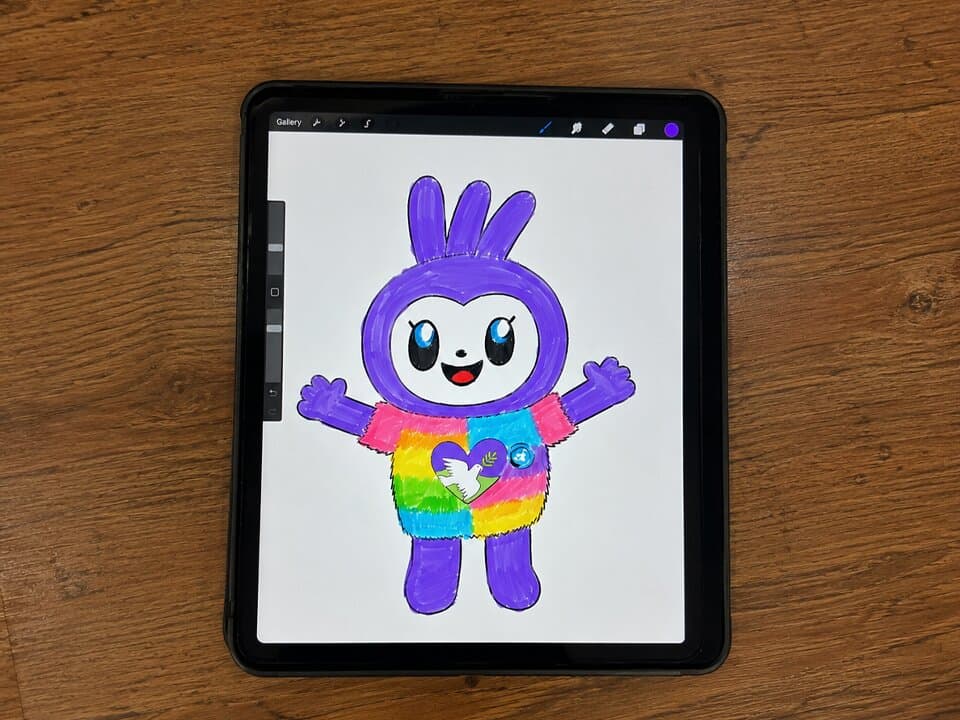
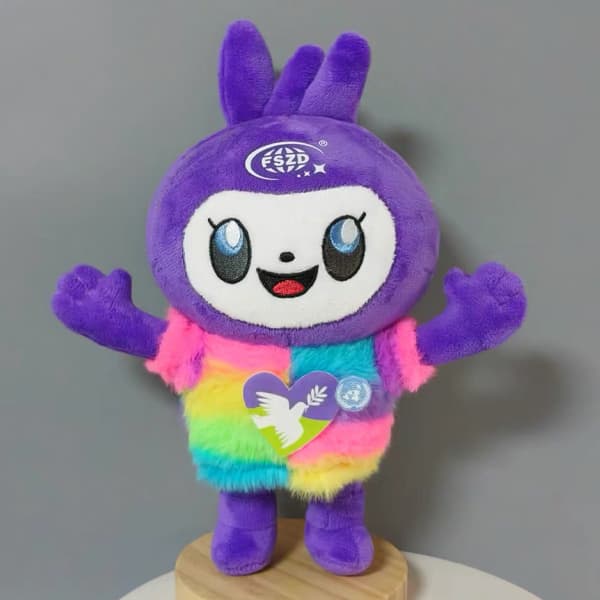
The factory adaptations that keep a mini looking sharp:
- 1Simplify silhouetteFewer, bolder shapes
- 2Cut colour countMerge subtle tones
- 3Embroider key featuresEyes & mouth survive handling
- 4Appliqué big blocksClean colour zones, detail on top
- 5Pull-test the tabThe hardware anchor is the safety point
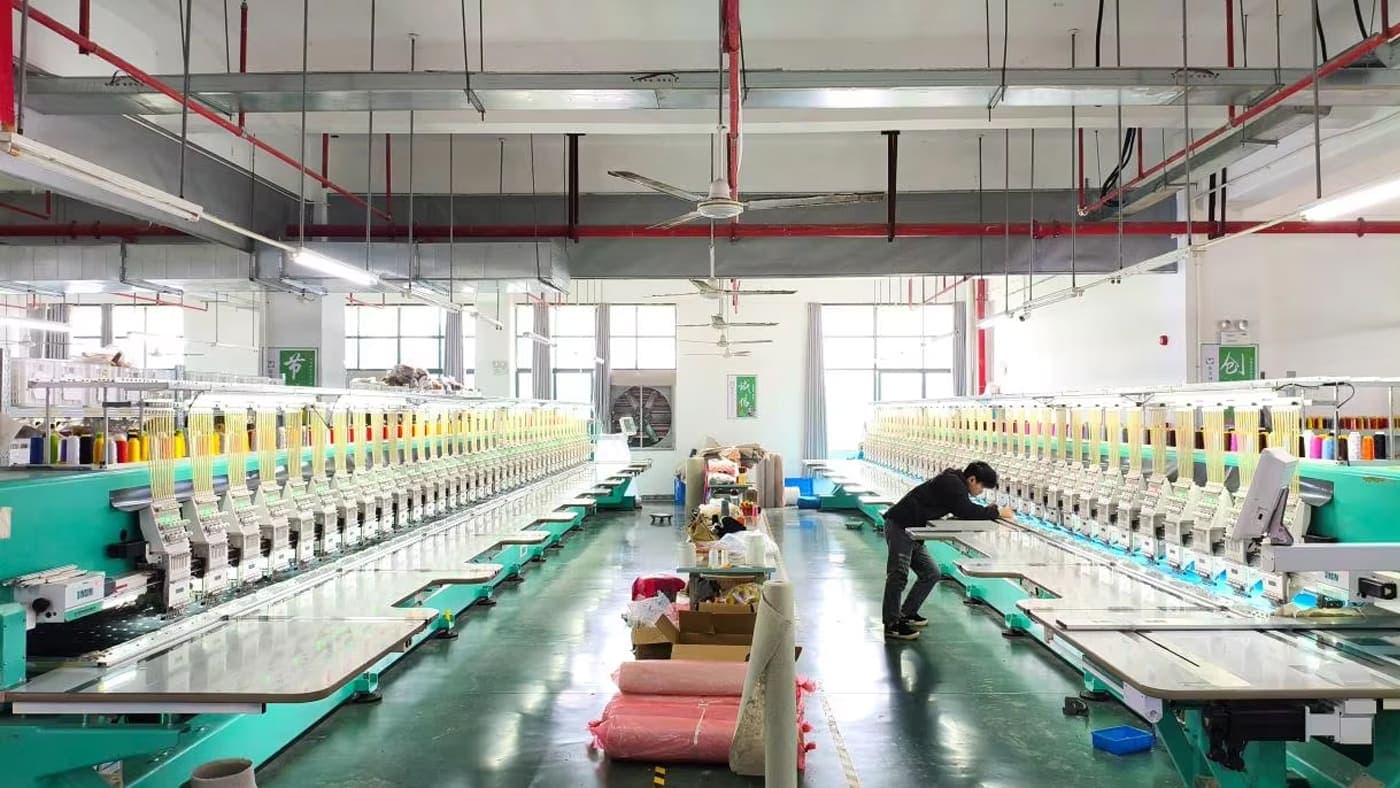
Short-pile fabrics dominate at this scale — short-pile PV plush, velboa, minky, velvet and felt all hold edges far better than long faux fur, whose pile would swamp small features. An RPET (recycled polyester) version is available where an eco story matters; the broader fabric & materials guide covers the full menu.
MOQ, tooling & cost economics
Mini plush are cheap per unit but firmly MOQ-driven, and the reason is simple: the cost is front-loaded into one-time setup — embroidery digitising, appliqué dies, colour matching and a sewn sample. That setup is identical whether you order 100 or 5,000, so it only makes sense once it's spread across a real run.
| Order quantity | Setup amortised over | Relative unit price | Sample / tooling fee |
|---|---|---|---|
| 300 (typical MOQ) | 300 pcs | Highest | ~$80–200, often credited |
| 500 | 500 pcs | Lower | Credited at MOQ |
| 1,000 | 1,000 pcs | Lower still — first big break | Credited |
| 5,000+ | 5,000+ pcs | Lowest | Negligible per unit |
We keep dollar figures out of the table on purpose — real prices swing with size, fabric, decoration count and freight, so a per-unit number without a spec is meaningless. For how to read and negotiate a real quote, see our MOQ & cost-breakdown guide.
Packaging: header card, polybag & blind-box
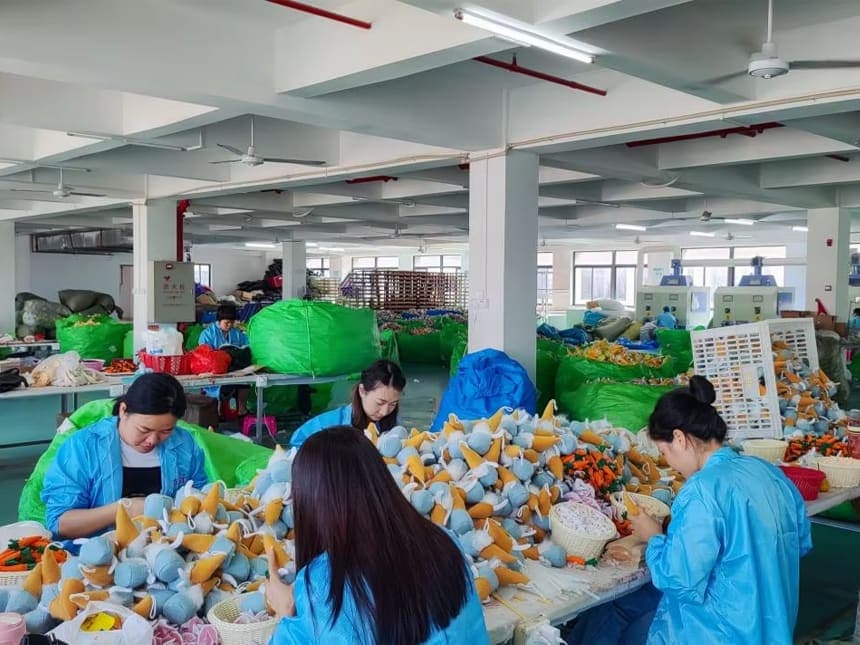
Packaging isn't an afterthought for minis — it's often where the margin and the merchandising live. Match it to the use case:
- Header card + polybag — the retail default; the card carries branding, barcode/SKU and any age or safety labelling.
- Backing / blister card — for peg-hook retail displays.
- Blind box / gacha— sealed opaque box or capsule with randomised designs and rare “chase” variants; the engine behind collectible plush. We can serialise SKUs and barcode each variant.
- Polybag-only / bulk — lowest cost for giveaways.
It's still a toy: safety & compliance
A mini plush is small, which makes the safety duty bigger, not smaller. If a child could use it, it's a toy in the eyes of the law. In the US that means ASTM F963 under the CPSIA — including the small-parts rule (anything that fits in the small-parts cylinder is banned in toys for under-3s), pull tests on the eyes and the hardware tab, and a fabric flammability test. In the EU it's EN 71 and the Toy Safety Directive with a CE mark.
The point most supplier pages bury: a promotional or merch plush still needs testing.Giving it away free doesn't exempt it — if it can reach children it falls under toy-safety law and may need lab testing and proper labelling. Our safety standards guide spells out what to ask your factory's lab for.
Make your mini plush
Send us your character and tell us the size, hardware and packaging you have in mind — we'll re-draw it for the scale, spec the materials and certify it to ASTM F963 / EN 71. Start on our contact page, request a sample, or browse our customer case portfolio.
よくある質問
What's the smallest a custom plush keychain can be?
What attachment hardware can I choose?
What's the typical MOQ, and why is it so high for something so small?
Should the face be embroidered or printed?
Are promotional or merch plush keychains subject to toy safety testing?
オリジナルぬいぐるみの製作を始めませんか?
ご計画の内容をお聞かせください。営業時間内であれば1時間以内に工場直送のお見積りをお送りします。