Vender peluches custom en Amazon: prep FBA, cumplimiento de juguetes y sourcing marca blanca
Una guía desde la fábrica para lanzar peluche de marca blanca en Amazon: ensayos ASTM F963 y tu CPC, la regla de advertencia de asfixia a 5 pulgadas, códigos FNSKU y GTIN, tramos FBA, deberes de importador y por qué se suspenden listados.

Selling plush on Amazon looks simple — until a listing gets suppressed for a missing compliance document, or the FBA fee eats the margin you thought you had. Generic “how to do Amazon FBA” advice misses two things that define plush: it's almost always a regulated children's product, and it's soft and bulky in a way that drives fulfillment fees. This guide covers both, from the factory that can ship you FBA-ready cartons.
Why plush is a different Amazon toy
Two facts shape everything else. First, plush is a children's product by default, so it carries the full weight of US toy-safety law before it can list. Second, plush is light but bulky, so it interacts with FBA size tiers and dimensional weight differently from a rigid toy of the same value. Get those two right and the rest is logistics.
Source & sample your private label
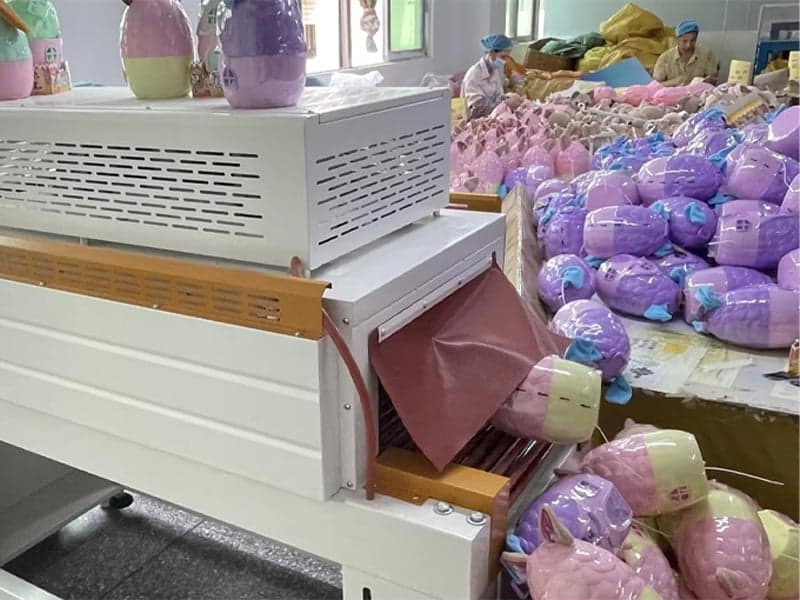
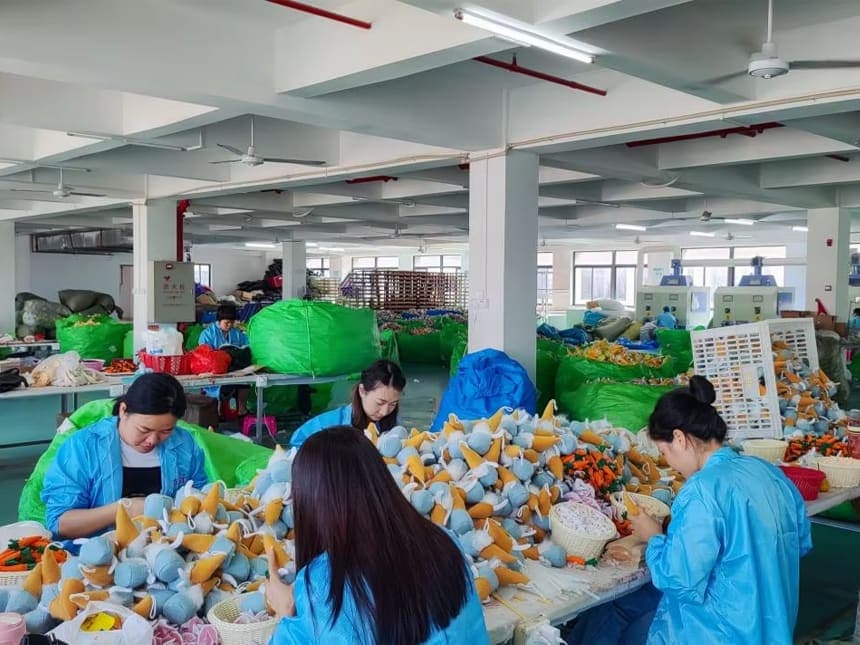
The flow is: find a factory, order a sample (your golden sample — the approved reference for the run), lock your branding (woven or embroidered logo, custom hangtag, sewn-in care and tracking label, retail box), confirm MOQ and price, then place the order with an AQL inspection on the line. The advantage of sourcing from the factory directly: the compliance test, the CPC, the tracking label, the suffocation poly-bag and the FNSKU can all be built into the production run, so you receive cartons that are literally FBA-ready. For the design side, start with our tech-pack guide.
Toy compliance before you list
This is the step that gets sellers suspended. ASTM F963 is the mandatory US toy standard (current F963-23 in force since April 2024). For plush intended for children 12 and under you must third-party test at a CPSC-accepted lab and issue a Children's Product Certificate (CPC), plus apply a permanent CPSIA tracking label and the right age grade and choking-hazard warnings.
FBA prep that keeps you listable
Every unit has to arrive prep-compliant. The checklist below is what a factory can bake into the run:
| Requirement | Why it matters | How it's done (and who) |
|---|---|---|
| GS1 GTIN / UPC | Amazon verifies against the GS1 database; reseller barcodes are rejected | Buy from GS1; seller provides the number |
| FNSKU label | Amazon's unit identifier; must cover the original barcode | Printed/applied at factory or prep center |
| Transparent poly-bag ≥1.5 mil | FBA packaging rule for soft goods | Factory bags each unit |
| Suffocation warning (5-inch rule) | Required when bag opening ≥5 in (nearly all plush) | Printed on bag or label by factory |
| ASTM F963 test report + CPC | Mandatory for children's products; #1 suspension cause | CPSC-accepted lab + your CPC |
| CPSIA tracking label | Permanent ID on product & packaging for recalls | Sewn-in label + carton mark |
| Age grade + choking warning | Required where small parts / age apply | Hangtag / box copy |
| Master carton limits & box content | FBA rejects oversize/overweight or mislabeled cartons | Factory packs to current FBA limits |
Freight, customs & you're the importer
Amazon will not be your importer of record — you are. That means filing an ISF “10+2” at least 24 hours before an ocean vessel sails, posting a customs bond, and paying duties. Plush usually classifies under HTS 9503 (stuffed animals are often duty-free at the base rate, but China-tariff policy moves — verify at entry). Many sellers ship to a US prep center first if the factory isn't handling FBA prep; if the factory is, cartons can go closer to the fulfillment center. The full freight picture is in our shipping & landed-cost guide.
- 1Source & sampleFactory, golden sample, branding
- 2Compliance gateASTM F963 test + CPC — don't list without it
- 3FBA prepPoly-bag + warning + FNSKU + GTIN
- 4Master cartonsWithin FBA size/weight limits
- 5Freight as IORISF 10+2, bond, duties
- 6Live listingMonitor for doc / validation requests
Cost it out before you commit
Your real sell-through cost is unit cost + freight + duty + FBA fulfillment fee + the ~15% referral fee on Toys & Games + storage + returns. The lever most sellers miss: FBA fulfillment fees are driven by size tier and dimensional weight (L × W × H ÷ 139), not actual weight — so a bulky plush can sit in a higher tier than its featherweight suggests. Vacuum or compression packing and right-sized bags can drop a whole tier. For unit-cost mechanics, see our cost & pricing guide.
Why listings get suppressed
- Missing CPC or test report (now often via Direct Validation) — the number-one cause.
- Missing or incorrect suffocation warning on the poly-bag.
- Wrong age grade or missing choking-hazard warning.
- Invalid GTIN — a reseller barcode or one that doesn't match your brand in GS1.
- FNSKU / labeling errors, or oversize/overweight carton rejections.
- A safety-document request not answered within Amazon's deadline.
Receive FBA-ready plush
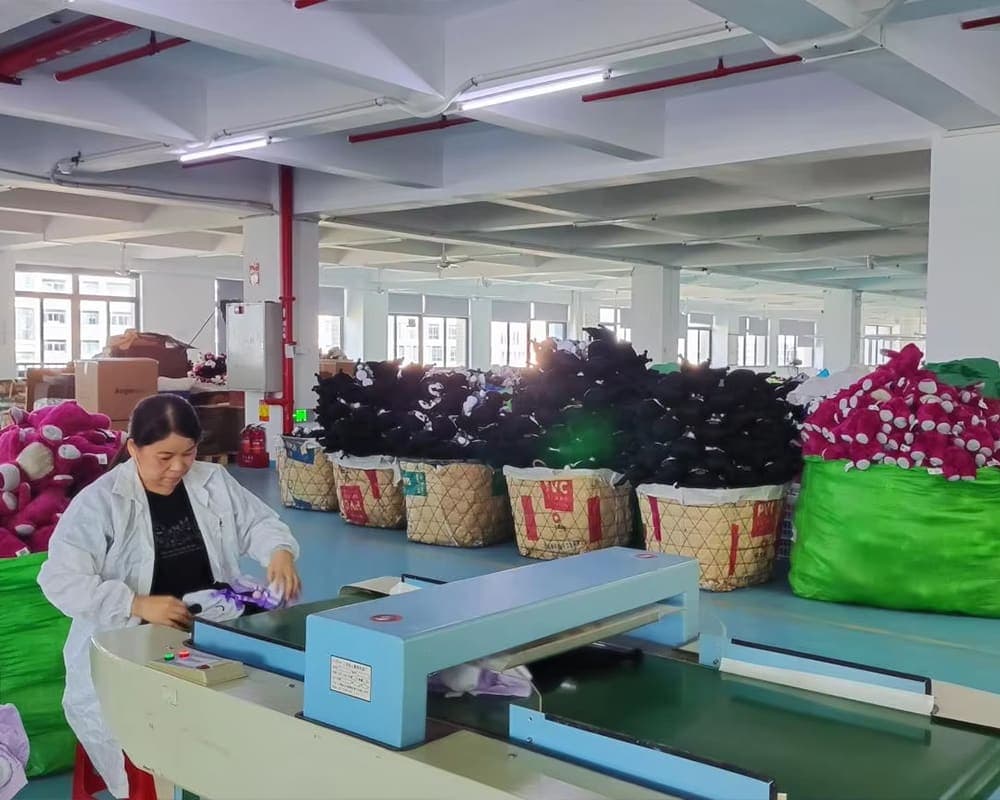
We can fold ASTM F963 testing, your CPC, the tracking label, the suffocation poly-bag and FNSKU labeling into the production run, so your cartons arrive listing-ready. Send your spec on our contact page, browse our customer case portfolio, or read the safety standards guide for the testing behind the CPC.