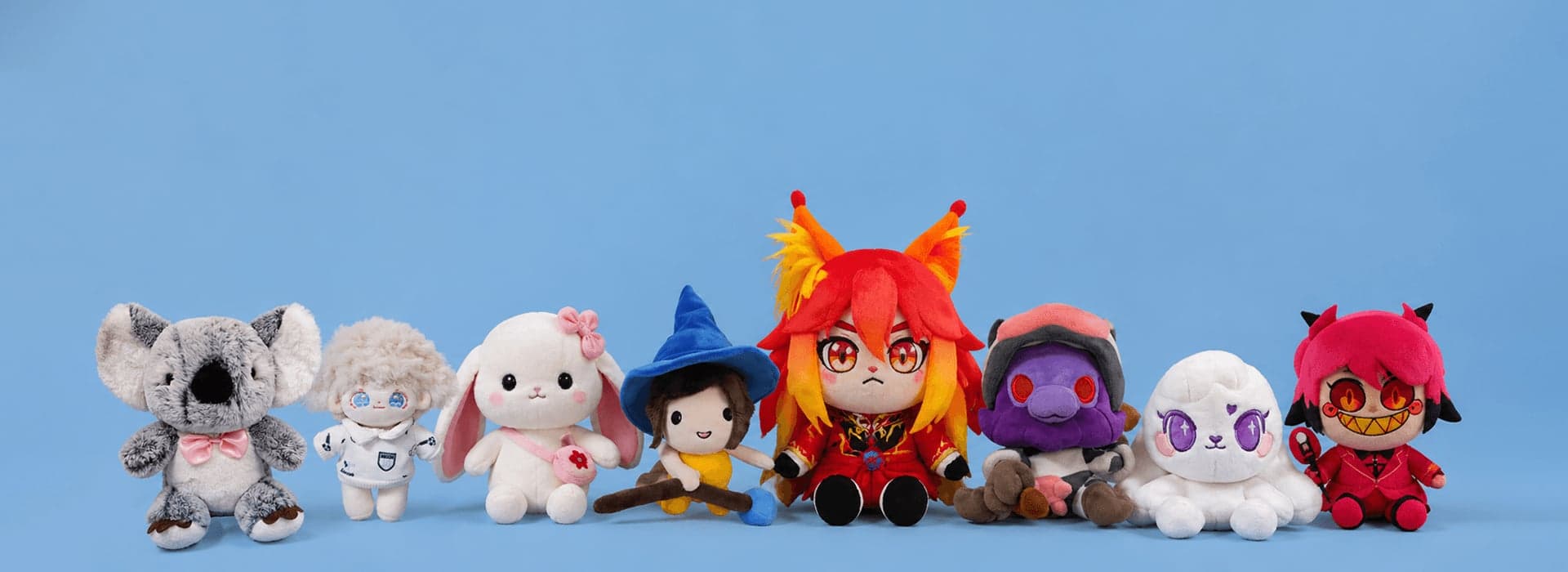
How Much Does It Cost to Make a Custom Plush Toy in 2026? Real Numbers
Honest 2026 cost breakdown for custom plush toys — materials, labour, accessories, MOQ-tier price impact, hidden cost lines. Real $/unit ranges, not vague estimates.

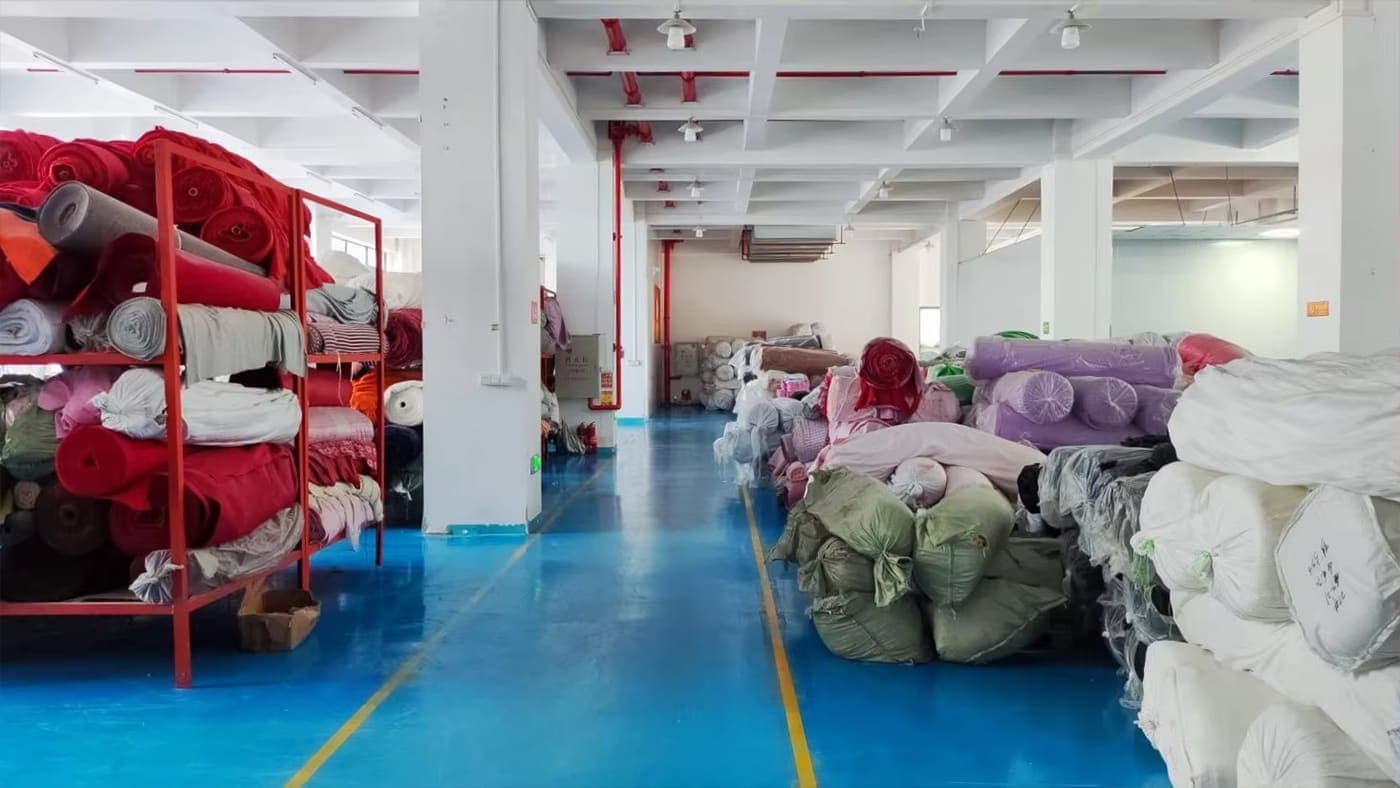
Most blog posts on this topic dodge the actual numbers behind vague phrases like “depends on complexity.” That's useful to nobody. Below are the real 2026 unit-price ranges we quote from our Shenzhen factory floor — with the line items underneath so you can see why a 20 cm plush at 1,000 pcs lands at $4.20 and not $2 or $9.
The honest answer (with ranges)
For a clean baseline mental model, anchor on these three sizes at 1,000 pcs MOQ, FOB Shenzhen, embroidered logo, stock-fabric colourway:
| Plush format | Size | Unit cost range (USD) | Typical retail anchor |
|---|---|---|---|
| Keychain plush | 8–12 cm | $1.20 – $2.40 | $5.99 – $9.99 |
| Giveaway plush | 15 cm | $1.80 – $3.20 | $9.99 – $14.99 |
| Standard plush | 20 cm | $3.50 – $6.50 | $19.99 – $29.99 |
| Hero plush | 25–30 cm | $5.50 – $9.00 | $29.99 – $44.99 |
| Giant plush | 50+ cm | $12 – $35 | $49.99 – $129.99 |
What actually drives unit cost
Five inputs explain ~90% of unit-cost variance for plush at our factory and at our peer factories in Shenzhen, Yiwu, and Dongguan:
- Fabric weight and pile length. Short-pile minky (~250 g/m²) is the volume baseline. Long-pile fur is ~30% heavier per square metre and ~15–25% more expensive. Sherpa is ~50% heavier.
- Fill weight.A premium 20 cm plush carries 80–120 g of 7D hollow PP cotton. Cheaper plush under-fills to ~50–60 g — feels flat, costs $0.30 less, kills perceived value. Don't skimp here.
- Embroidery stitch count. Every 1,000 stitches adds roughly $0.08 per unit at 1,000 pcs. A 6-colour logo at 6,000 stitches adds ~$0.48; a 12-colour mascot at 25,000 stitches adds ~$2.
- Accessories. Sound chips $0.80–$3.50, LED $1.20–$4.50, magnets $0.30–$0.80, custom hang tag $0.20–$0.50, gift box $1.50–$4. Each adds a per-unit cost AND a per-unit QC cost we pass through.
- Custom dye vs stock Pantone. Stock fabric (from our 200+ pre-dyed Pantone library) is the baseline. Custom dye adds $1.50–$3 per metre and a 100 m minimum — roughly $0.30–$0.80 per unit at typical plush dimensions, plus 5–7 days lead time.
Per-unit cost breakdown by line item
Take a typical 20 cm embroidered plush at 1,000 pcs FOB Shenzhen — quoted at $4.20 / unit. Here's where the money actually goes (factory-side, before margin):
| Line item | % of unit cost | USD |
|---|---|---|
| Plush fabric (~0.15 m² outer + lining) | 22% | $0.92 |
| PP cotton fill (100 g 7D hollow) | 8% | $0.34 |
| Embroidery thread + machine time | 11% | $0.46 |
| Cutting + sewing + stuffing labour | 26% | $1.09 |
| Hang tag + polybag + sticker | 6% | $0.25 |
| Quality control (3 stages) | 7% | $0.29 |
| Pattern + sample amortisation | 4% | $0.17 |
| Factory overhead (rent, electricity, audits) | 9% | $0.38 |
| Factory margin | 7% | $0.30 |
Two things to notice: labour is 26%, the single biggest line — which is why cost-cutting strategies that compress labour quality (faster sewing, fewer QC stages, no mid-line inspection) show up immediately in defect rates. And factory margin is only 7%; if a supplier's quote is 25% below ours, they're either a broker quoting a different factory or cutting an item like QC stages or fill weight.
How MOQ shifts the curve
The pattern, sample, and embroidery digitising costs are roughly fixed per design. Spread them across more units and per-unit cost drops fast. Below: same 20 cm embroidered plush, different MOQs:
| Quantity tier | Unit cost | Drivers |
|---|---|---|
| 100 pcs (entry) | $5.80 – $8.50 | Setup cost dominates; sample fee not refunded |
| 300 pcs | $4.50 – $6.80 | Setup amortises somewhat; per-unit still high |
| 1,000 pcs (baseline) | $3.50 – $6.50 | Setup negligible; full pricing logic kicks in |
| 5,000 pcs | $2.80 – $4.80 | Better fabric utilisation; reduced per-unit QC overhead |
| 25,000 pcs | $2.10 – $3.40 | Volume discount from suppliers (thread, fabric, hang tag) |
For a brand launch, the sweet spot is usually 1,000–3,000 pcs per SKU — enough to amortise setup, low enough to test the SKU before committing 25,000-pc inventory. We've seen first-time brands order 500 pcs of 12 SKUs and then re-order the 2 that worked at 5,000 pcs — much smarter than 5,000 pcs of one SKU you haven't tested.
Accessory cost adders (real numbers)
Each accessory has both a hardware cost and an integration cost. Real adders at 1,000 pcs:
| Accessory | Hardware cost | Integration cost | Total adder |
|---|---|---|---|
| Sound chip (Tier 1, single-clip) | $0.80 – $1.20 | $0.20 – $0.40 | $1.00 – $1.60 |
| Sound chip (Tier 3, premium 16-bit) | $2.50 – $3.50 | $0.40 – $0.60 | $2.90 – $4.10 |
| LED (fibre-optic single colour) | $1.20 – $2.00 | $0.30 – $0.50 | $1.50 – $2.50 |
| LED (RGB colour-cycle) | $2.50 – $3.50 | $0.40 – $0.60 | $2.90 – $4.10 |
| Magnets (encapsulated, 2 pcs) | $0.30 – $0.80 | $0.20 – $0.40 | $0.50 – $1.20 |
| Velcro outfit attachment (4 points) | $0.40 – $0.70 | $0.30 – $0.50 | $0.70 – $1.20 |
| Scent pouch (encapsulated beads) | $0.40 – $1.80 | $0.20 – $0.40 | $0.60 – $2.20 |
| Weighted fill (glass bead, 1.5 lb) | $1.80 – $3.20 | $0.40 – $0.80 | $2.20 – $4.00 |
Read more about specific capability tradeoffs at embroidery, sound chip, and LED light-up capability pages.
Five hidden cost lines that catch first-time buyers
- Embroidery digitising fee. $40–$80 one-time per logo, waived at 500+ pcs at our factory. Some suppliers hide this in the unit price; some itemise. Ask explicitly.
- Custom-dye fabric minimum.If your Pantone isn't in our stock library, custom dye carries a 100 m minimum. On a small order that's a $200–$400 line item you may not have budgeted.
- Safety test reports (small orders). EN71 / ASTM F963 / CPSIA test reports cost ~$400–$600 per spec from SGS, Bureau Veritas or Intertek. At 1,000+ pcs most factories include them; below that you pay separately.
- Retail-ready packaging. Basic polybag is usually included. Custom hang tag, branded gift box, tissue wrap, EAN-13 barcode label — each is a $0.20–$2 line item. Get an itemised packaging quote.
- DDP shipping adders.If you accept a DDP quote, ask what's included. Some suppliers exclude duties (you pay on import), customs broker fees, last-mile to your warehouse, or fuel surcharges. A clean DDP quote includes all of these in one number.
Sample fees and when they're refundable
Sample fees at most reputable factories: $80–$200 per sampledepending on complexity, refundable on bulk orders ≥500 pcs. Express sample (3 days) adds a 30% surcharge that's usually NOT refunded — it pays for the line interruption.
For multi-size sample programs (e.g. 20 cm + 30 cm + 40 cm to decide retail SKU sizing), each size is a separate sample fee. We recommend ordering all sizes upfront — picking the right retail size after the bulk is committed is expensive in a different way. See our dedicated sample request page for the full process.
Shipping — FOB vs DDP cost math
Two main Incoterms for plush shipped from China: FOB (factory hands off at port) and DDP (factory delivers to your warehouse, all duties prepaid).
| Mode | Transit time | Cost (USD total) | Per-unit shipping cost |
|---|---|---|---|
| Sea LCL (FOB → buyer's forwarder) | 30–40 days | $1,800 – $2,400 | $0.90 – $1.20 |
| Sea FCL (DDP, full 20ft container) | 25–35 days | $3,800 – $5,200 | $1.90 – $2.60 |
| Air freight (DDP) | 5–8 days | $6,500 – $9,000 | $3.25 – $4.50 |
| Express courier (DHL/FedEx) | 3–5 days | $8,000 – $11,000 | $4 – $5.50 |
Recommendation for first-time buyers: DDP sea freight. One all-in number, no surprise duties at port, no customs broker to manage. The 15–25% premium over a self-arranged FOB is worth the simplicity. Reference Maersk shipping for current container rates.
What's negotiable and what isn't
After 10+ years of buyer conversations, here's the honest distinction:
- Negotiable:sample fee (often waived for repeat buyers), embroidery digitising fee (waived at 500+ pcs), DDP destination markup (we'll match if you have a forwarder quote), payment terms (30/70 split can become 30/40/30 at milestones for ≥3rd reorder), MOQ on stock-fabric designs (we'll occasionally go to 150 pcs for great-fit brands).
- Not negotiable: custom-dye 100 m minimum (the dye facility has the minimum, not us), safety test costs (third-party lab pricing is fixed), accessory MOQs from suppliers (sound chips, LED modules), audit requirements ( ISO 9001 / BSCI are pre-paid annual fees), fundamental material cost (cotton, polyester, embroidery thread are all commodity-priced).
Closing — how to use these numbers
Take these ranges into your supplier conversations as anchors, not absolutes. A quote outside our ranges in either direction deserves a question — too low usually means hidden cuts (fill weight, QC stages, broker margin absorbed), too high usually means broker markup or capability mismatch.
For the full sourcing decision framework — when to buy direct vs through a trading company vs Alibaba — see our factory vs trading company comparison and the MOQ cost-breakdown article. Ready to get a quote on your spec? Submit a brief at our contact page; we typically reply within one business hour with an itemised quote.