Custom Plush for Video Game & Esports Brands: Turning Characters into Merch
How game studios and esports orgs make official plush of their own characters — the 3D-model-to-plush workflow, owning your IP, clearing MOQ with a drop, convention timing and safety.

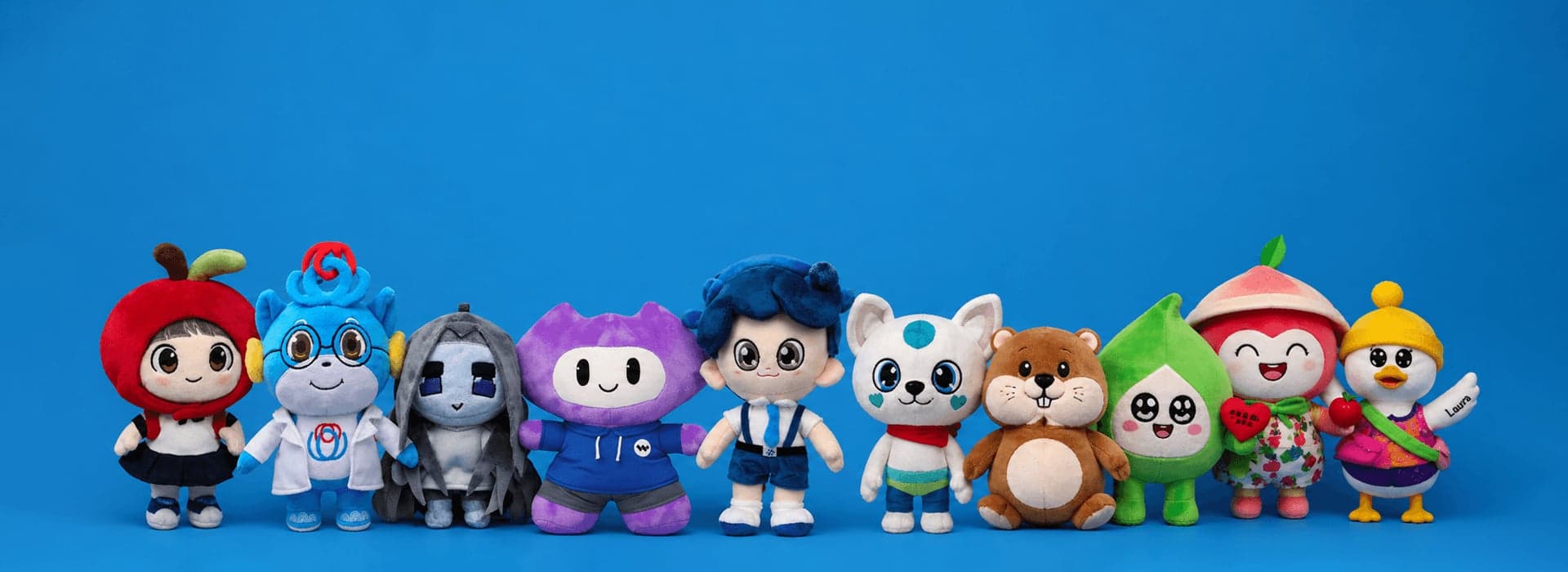
Games build some of the most devoted fandoms on earth, and the merch they want most isn't a tee — it's a plush of the character they've spent a hundred hours with. For a studio or esports org, that's a rare advantage: you already own the IP and you already have the 3D models. This is the guide to turning them into a plush drop your players will actually queue for — from the model workflow to the safety they'll scrutinize.
Why plush is a top gaming merch product
Players form real emotional attachments to characters, and a plush is the one piece of merch that's collectible, displayable and huggable at once. Game plush — from crewmates to beans to a studio's signature creature — sell out as drops precisely because the fandom is already there and already engaged. It's a soft-toy format doing what apparel can't.
From 3D game model to sewn plush
Here's the studio's head start: you already have 3D model turnarounds and a style guide, so design doesn't start from scratch. The job is simplification — reduce the character to a chibi plush, lock the silhouette and three to five signature colors, keep the signature prop or feature (the hat, the weapon, the ears), and embroider the crisp details(eyes, logo) rather than printing them. The in-game model's UVs are built for texturing, not sewing, so a pattern-maker re-works it into sewable panels.
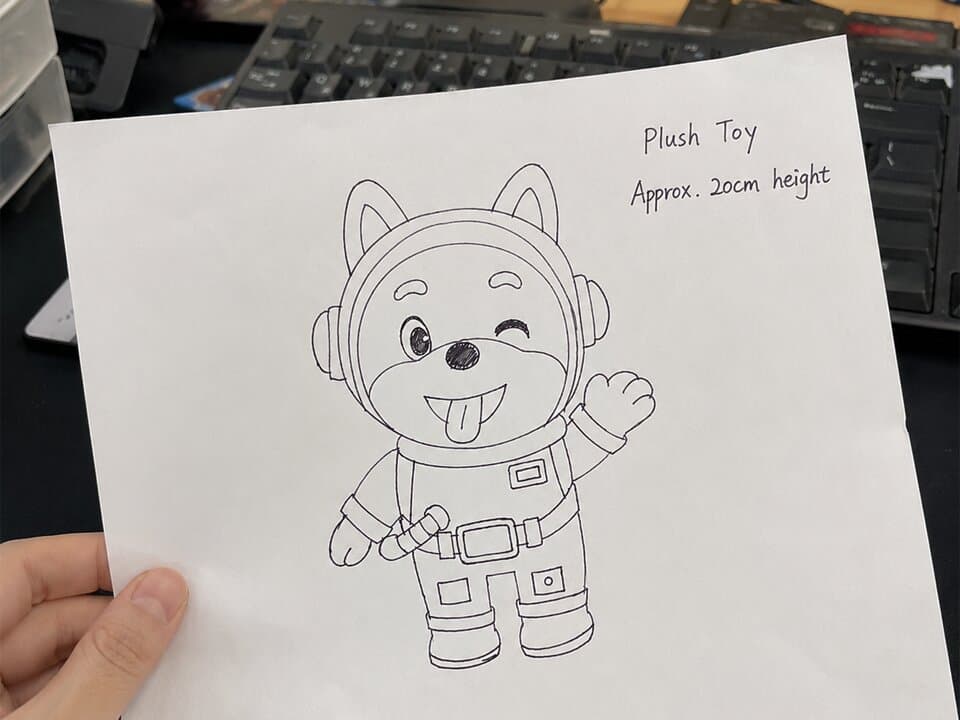
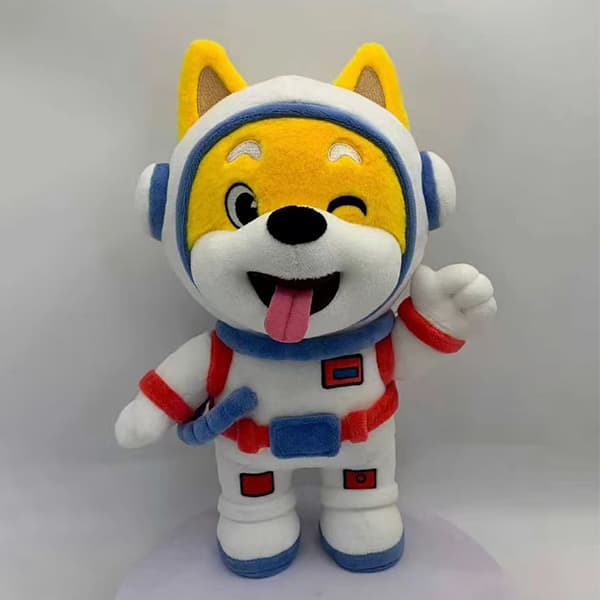
The deeper 2D-to-3D mechanics are in our drawing-to-plush guide and creator merch guide.
You own the IP — but trademark it
The big advantage over licensed merch: your original game character is yours. Copyright in the art and 3D model is automatic from creation — no third-party license needed to make plush of your own design. When you commercialize it, register a trademark on the character's name and logo for stronger brand protection. The one hard line: making plush of another studio's game needs a license.
The drop model: de-risking MOQ
Custom plush carry a minimum order of roughly 300–500 units, which a drop clears without inventory risk: announce the plush, open a limited pre-order window, and produce only what sold once the minimum is hit. It's the model platforms like Makeship and Youtooz popularized for game plush — and you can run your own.
| Limited drop | Stocked inventory | |
|---|---|---|
| How it works | Time-boxed pre-order | Hold inventory, sell continuously |
| Inventory risk | None — make what sold | You carry unsold stock |
| Hype | Scarcity, FOMO, collectible | Always available |
| Best for | Launches, anniversaries, cons | Evergreen flagship characters |
- 1Simplify the character3D model → chibi turnaround
- 2Approve a sampleLock silhouette, colors, size
- 3Announce & pre-orderLimited window to the player base
- 4Hit the minimumClears the MOQ (or refund)
- 5Produce & shipMake what sold + safety testing
Timing: launches & conventions
A drop sells best when fan attention is already concentrated — so tie it to a moment, and plan production backward from the date:
| Moment | Why it works |
|---|---|
| Game launch / major update | Peak attention & new-character hype |
| Anniversary / milestone | Nostalgia and community pride |
| A convention (PAX, TwitchCon, gamescom) | Concentrated, in-person superfans |
| Esports event / final | A captive, passionate audience |
Because plush has a real lead time (sampling, production, freight), work back from the show or launch date — the same backward planning as our seasonal planning guide.
Esports mascots & collector variants
Beyond game characters, esports orgs make plush of their team mascots and logos as fan merch. And the collectibility lever works hard here: color variants, rare “chase” versions and blind-box formats turn one character into a series fans want to complete — the same engine behind our blind-box collectible plush guide.
Quality, safety & global fulfillment
Players scrutinize a plush like collectors — silhouette, color match, embroidery — and unbox it publicly, so the sample-approval and QC step is where the drop's reputation is made. And treat every plush as a toy, because players include minors: that means ASTM F963 / CPSIA (US) and the EU Toy Safety Directive with EN 71 and CE, backed by test reports. The detail is in our safety standards guide.
Turn your character into a plush drop
Send us your character turnaround and the moment you're building toward, and we'll handle the chibi simplification, a sample your players will approve of, low-risk MOQ via pre-order, and tested-to-standard safety. Start on our contact page, request a sample, or browse our customer case portfolio.
Preguntas frecuentes
How do I make a plush of my game character?
Do we own the rights to make plush of our own game character?
Do I need a minimum order?
How do game studios make plush 'drops'?
Are game plush considered toys for safety purposes?
¿Listo para crear tu propio peluche personalizado?
Cuéntanos tu proyecto y recibe un presupuesto directo de fábrica en 1 hora laborable.