Claw Machine & Arcade Plush Manufacturing: The UFO Catcher Sourcing Guide
How crane-game plush are engineered for grabbability and win-rate tuning, the low-cost / high-MOQ economics, the licensing reality, bulk packaging and the toy-safety rules that still apply.

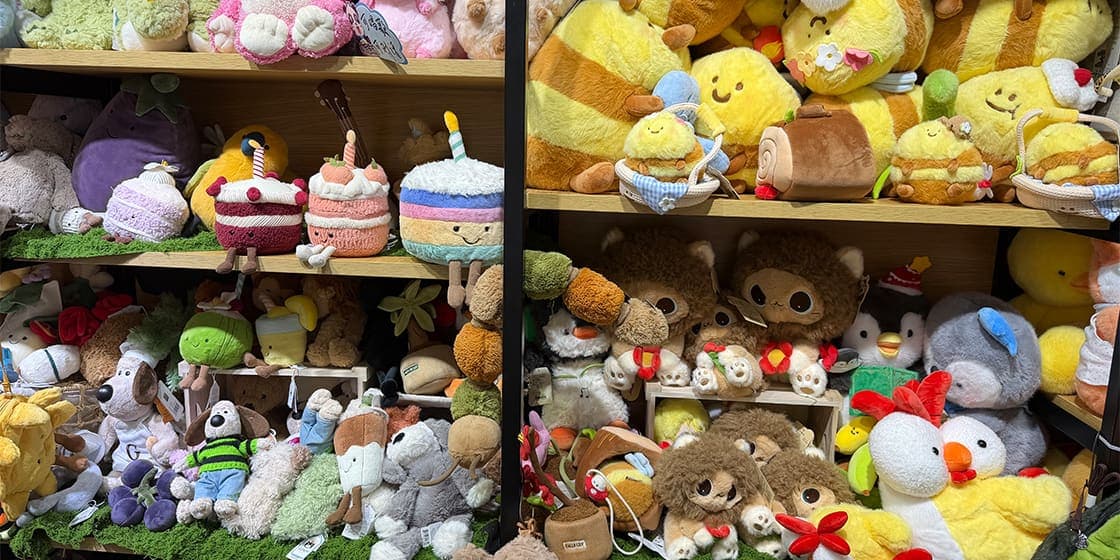
Arcade plush live by rules no retail plush has to follow: they must be cheap enough to give away by the thousand, vivid enough to sell a coin-drop through glass, and shaped and weighted so the claw can grab them — but only as often as the operator allows. Most guides are written either for operators buying refills or for factories selling capacity. This one bridges both: how the plush is actually engineered, what it costs, and the licensing and safety realities behind the prize chute.
Why arcade plush is a different product
A crane-game plush is a prize-economy product: cheap per unit, made in huge volume, built to be seen and grabbed, and dispensed bare from a polybag. Softness, fine detail and premium materials — the things a retail plush competes on — all give way to cost, visibility and grabbability. Get those three right and the machine earns; get them wrong and it sits unplayed.
“UFO catcher,” crane games & the market
The term comes from Sega: the UFO Catcher launched in 1985, named for a claw that descends like a flying saucer to abduct a prize, and it became so dominant that “UFO catcher” is now the generic Japanese term for all crane games. Two market styles matter for sourcing: Japan-style machines stocked with licensed anime/character prizes (often arcade-exclusive items never sold at retail), and Western machines stocked with generic bulk-fill plush. Which one you're building for decides everything about licensing and cost.
Engineering for “grabbability”
This is the part no competitor explains. A claw can only lift a plush that gives it something to hold and a weight it can carry. The factory-side levers:
| Factor | Target | Why it matters |
|---|---|---|
| Longest dimension | Under ~30 cm (12 in) | Larger jams the playfield / blocks claw travel |
| Weight | ~150–220 g sweet spot | Light enough to lift; lighter raises grab success |
| Graspable feature | Head, limb or sewn loop | The claw needs a narrow point to close on |
| Weight consistency | Tight unit-to-unit tolerance | Variance breaks the operator's tuned win rate |
| Visibility | Big eyes, saturated color | Sells the coin-drop through machine glass |
A sewn-in hang loop or tab does double duty: it gives the claw an exposed grab point and lets operators hang jumbo display prizes.
Operator economics: how your plush sets the win rate
Operators tune machines to a target win rate — commonly around 10–30%, lower for premium or jumbo prizes — by adjusting claw strength and drop skill(whether the claw deliberately releases). The prize itself is half that equation: a cheap, light, consistently-built plush can sustain frequent wins, while a high-value prize is run at a lower rate. That's why the factory's job isn't just “make it cute” — it's “make it identical, every time, at the target weight.”
Cost & MOQ: the volume sourcing model
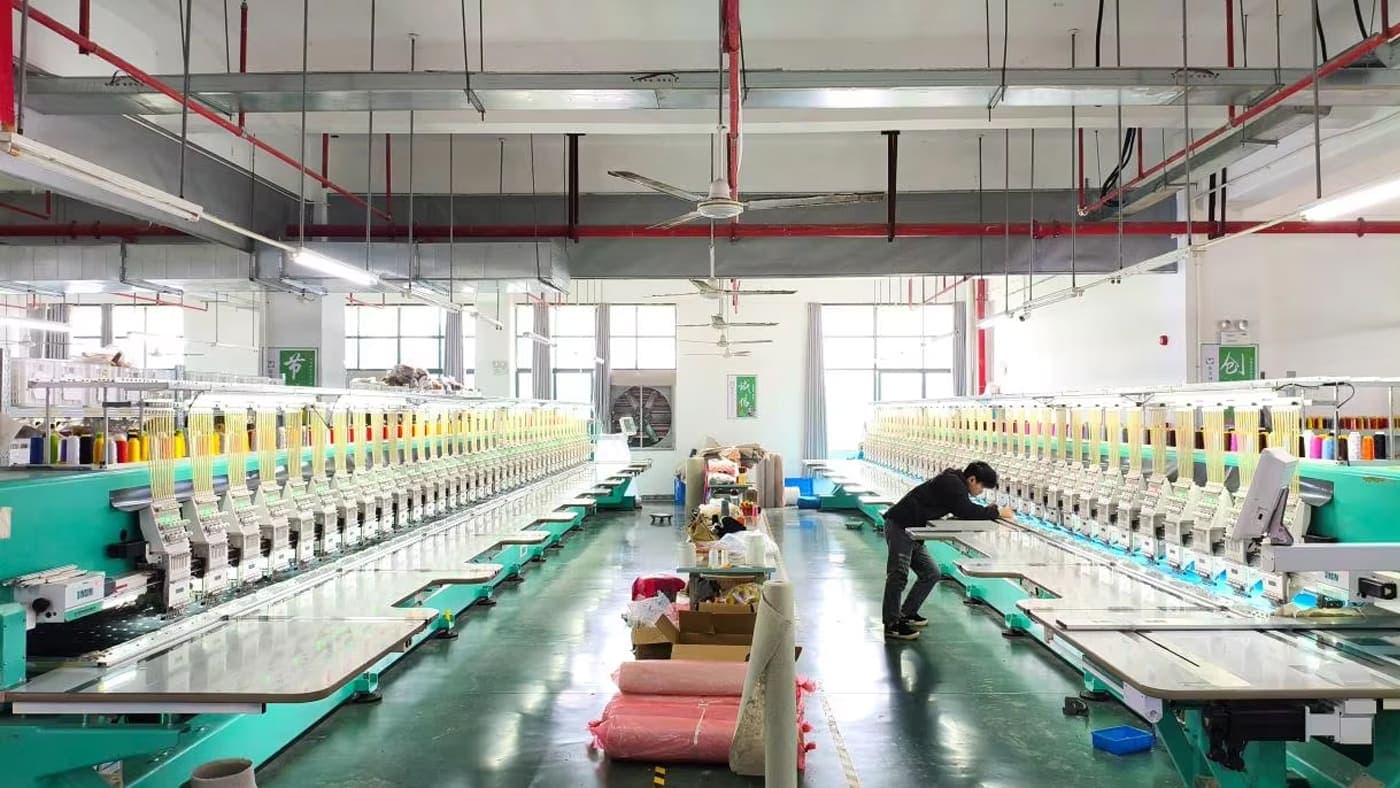
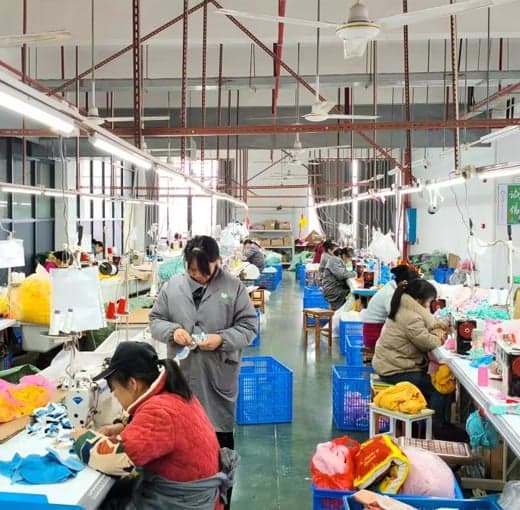
The defining economics: very low per-unit cost, very high MOQ. Simple construction and economical materials keep the unit price down; the minimums exist because the one-time setup only makes sense spread across a big run. Indicative ranges (they swing with size, materials and volume):
| Size | Use | Typical MOQ | Relative unit cost |
|---|---|---|---|
| Mini (~10 cm) | High-density 'win often' machines | 300–500 / style | Lowest |
| Small (~15–20 cm) | Standard prize fill | 500–1,000 / style | Low |
| Medium (~25–30 cm) | Feature prizes | 500–1,000 / style | Moderate |
| Jumbo (40 cm+) | Low-win-rate showcase prize | Lower volume | Higher per unit |
Design fees (~$100–150) and sample fees (~$80–200) are usually credited against the bulk order. For how price moves across volume tiers, see our MOQ & cost-breakdown guide; arcade plush ship in individual polybags, bulk-packed by case — minimal packaging, since the prize is dispensed bare.
Licensing: you can't just make Pikachu
A huge share of UFO-catcher plush is licensed character IP — and that means rights, not just manufacturing. A factory can make the plush; it cannot grant you the license. Producing or stocking a copyrighted/trademarked character without authorization is infringement. Your two clean paths:
- 1Is your design a licensed character?Anime, Pokémon, Sanrio, Disney…
- 2If yes → secure the licenseHold or obtain IP rights first
- 3If no → original / generic designNo licensing needed
- 4Factory builds your designWe make it; you hold the rights
The deeper how-to of licensed manufacturing — approval gates, anti-counterfeiting — is in our anime & licensed character plush guide.
It's still a toy: safety & compliance
Winning a plush from a machine doesn't exempt it from toy law — if a child can win it, it's a children's toy. In the US that means ASTM F963, mandatory under the CPSIA (third-party testing + a CPC); in the EU it's EN 71 with CE marking. Full detail in our safety standards guide.
Source your arcade plush
Tell us your machine type, target size and weight, and whether you're running licensed or original designs — we'll build to a tight weight tolerance, certify to ASTM F963 / EN 71, and bulk-pack for the route. Start on our contact page, request a sample, or browse our customer case portfolio.
الأسئلة الشائعة
What size should claw machine plush be?
Why are arcade plush so cheap?
Do I need a license for character claw machine plush?
Why do weight and shape matter for claw machine plush?
Are claw machine plush still subject to toy safety laws?
جاهز لصنع دميتك القطيفة المخصصة؟
أخبرنا بمشروعك واحصل على عرض سعر مباشر من المصنع خلال ساعة عمل واحدة.