Custom Mascot Plush Toys: A Factory Insider's Guide to Sizes, MOQs, Timelines & Design
Buyer's playbook for custom mascot plush — sports teams, schools, brands, conferences, IP. Size-band pricing, 16-week event countdown, decoration methods, design tips that survive the factory floor, and IP/licensing.

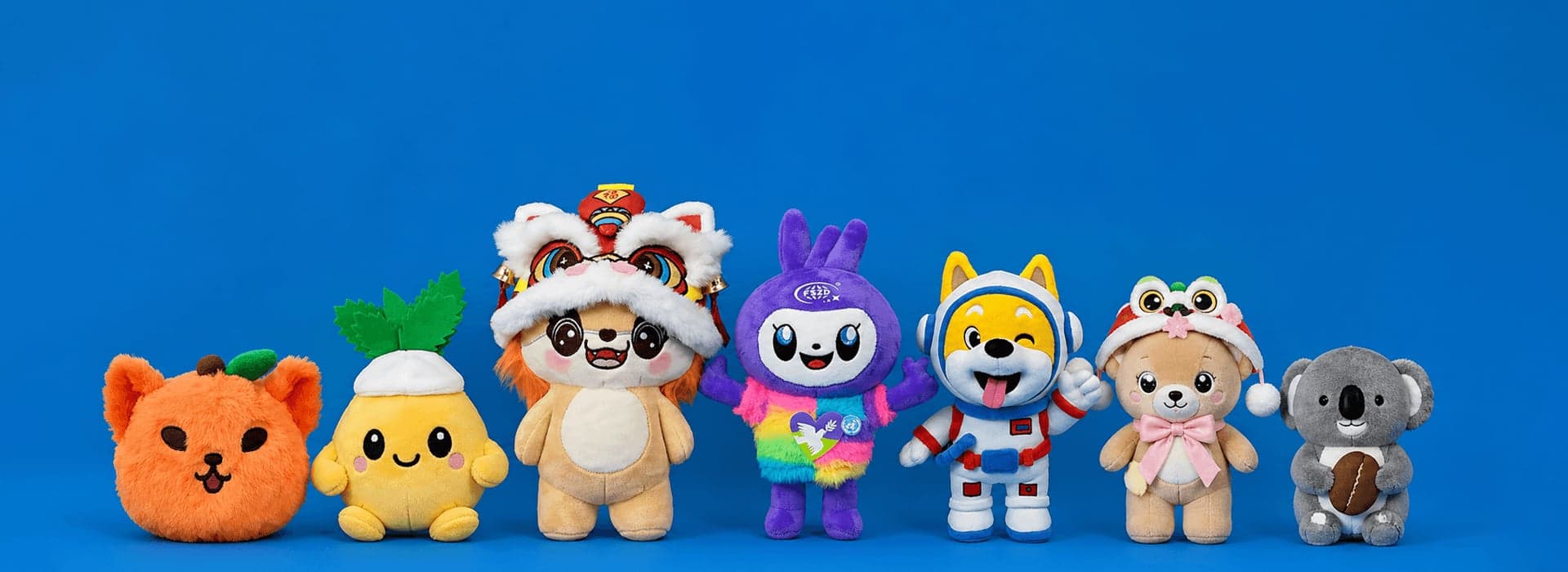
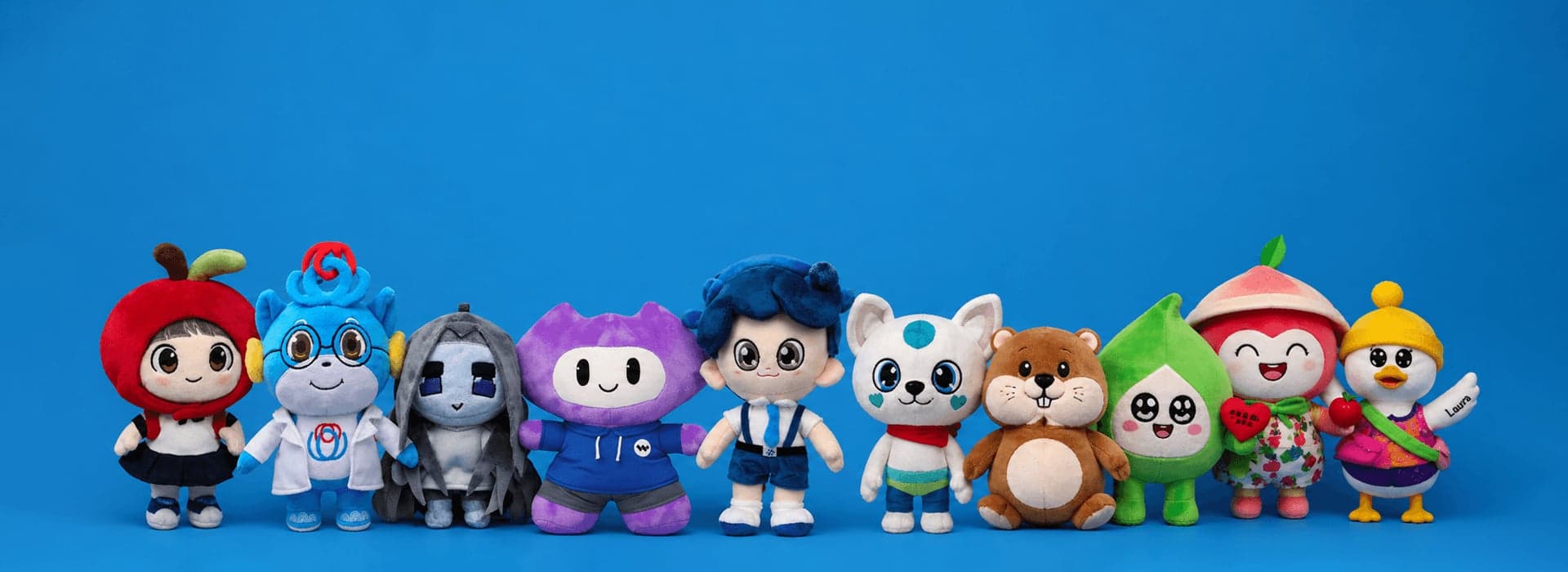
A custom mascot plush is the single most-photographed item a brand will ever produce. A college orientation tosses 500 of them into a crowd in 90 seconds. A SaaS conference puts one on every chair at the gala dinner. A new sports team launches a season around the unboxing video. None of this works if the plush itself disappoints — and most of the disappointments come from problems we could have flagged on day one. This guide is what we wish every mascot brief came with: real sizes, real MOQs, real lead times, and the specific design tips that survive the cut, sew, and stuffing process.
Who orders custom mascot plush — and what they need
Mascot plush programs cluster into six recognisable patterns. The brief looks different for each — sizes, embroidery complexity, packaging, and timeline expectations all shift based on the buyer's playbook.
| Buyer | Typical use | Spec pattern |
|---|---|---|
| University / college | Orientation, alumni gifting, bookstore retail | 8" giveaway + 12" retail SKU, embroidered jersey |
| Pro / minor-league sports team | Game-day retail, ticket-bundle, kids' club | 10"-15" retail, licensed mark, hangtag |
| Corporate brand | Trade-show booth giveaway, employee gift | 6"-8" keychain or 10" desk plush, embroidered logo |
| SaaS / tech conference | VIP swag, sponsor gift, retention reward | 10"-12" branded character, gift box |
| IP / character licence | Retail, e-commerce, collector tier | Range: 8"/12"/24", licensed art kit |
| Non-profit / fundraiser | Donor thank-you, school fundraising | 8" plush, polybag, modest MOQ |
Picking the right size — and the cost tier that comes with it
Sizes in plush are measured seated unless otherwise noted, and the same character at 6" / 8" / 12" / 15" is effectively four different SKUs from a production standpoint — different pattern blocks, fabric metres, fill weight, and packaging.
| Size | Typical use | Weight | MOQ | FOB band |
|---|---|---|---|---|
| 6" (15 cm) keychain | Trade-show giveaway, retention swag | 30–60 g | 300–500 pcs | $1.80–$2.60 |
| 8" (20 cm) giveaway | Orientation, donor gift, kids' club | 100–160 g | 300–500 pcs | $2.40–$3.40 |
| 10" (25 cm) mid plush | Conference VIP gift, mid-retail | 180–250 g | 300 pcs | $3.00–$4.20 |
| 12" (30 cm) retail | Bookstore retail, game-day | 250–360 g | 300 pcs | $3.60–$5.20 |
| 15" (38 cm) flagship | Premium retail, VIP gift | 400–550 g | 300 pcs | $5.20–$7.50 |
| 20"+ (50 cm+) statement | Window display, photo prop, top-tier collector | 0.9–1.6 kg | 200 pcs | $10.00–$18.00 |
MOQ & pricing tiers — what changes with volume
Plush MOQs are driven by fabric dye-lot economics (300–500 m mill MOQ per Pantone) and sewing-line changeover cost. Per-unit pricing typically drops 12–20% between the 300-pc and 1,000-pc tiers, and another 8–15% from 1,000 to 5,000.
| Tier | Unit price | Per-piece savings | Total order |
|---|---|---|---|
| 300 pcs | $3.80 | Base | $1,140 |
| 500 pcs | $3.40 | −10.5% | $1,700 |
| 1,000 pcs | $3.10 | −18.4% | $3,100 |
| 3,000 pcs | $2.75 | −27.6% | $8,250 |
| 5,000 pcs | $2.55 | −32.9% | $12,750 |
| 10,000 pcs | $2.35 | −38.2% | $23,500 |
Indicative pricing for a 10" character mascot, mid-pile minky, embroidered chest logo. Custom artwork and licensed marks add tooling fees independent of unit cost.
The 16-week event countdown
Every mascot plush program that ships on time was started on time. Below is the calendar we hand to clients with a hard event date — back-counted from the moment the first plush needs to be in someone's hand.
- 1Brief & quoteWeek 1: art kit, sizes, MOQ, quote
- 2Tech packWeek 2: pattern, BOM, embroidery digitisation
- 3SampleWeek 3–4: first sample + Pantone lab-dip
- 4RevisionsWeek 5: sample revisions + sign-off
- 5Bulk runWeek 6–13: dyeing, cut, sew, embroidery, stuffing
- 6QC + packWeek 14: 100% visual + AQL 2.5 sample
- 7ShipWeek 15–16: air (5 days) or sea (25–35 days)
Embroidery vs printed vs appliqué vs woven label
How you reproduce a logo or jersey number on a plush determines lead time, durability, age-safety, and how the finished product looks under camera flash. Pick by logo complexity, not by what the factory recommends first.
| Method | Best for | Trade-offs | MOQ impact |
|---|---|---|---|
| Direct embroidery | Simple logos, 2–6 colours, no fine type under 3 mm tall | Adds 30–90 sec per piece; thread count drives cost; safest for all ages | Light — same as base |
| Printed (DTG / sublimation) | Detailed art, photos, gradients, fine type | Cracks over time on heavy use; requires polyester base | Light |
| Embroidered patch + sew-on | Detailed logos that still need stitch feel | Adds a per-piece patch cost; slightly stiffer hand | Patch tooling fee |
| Appliqué (cut fabric layer) | Bold jersey numbers, colour-block crests | Beautiful retail look; doubles labour cost | Pattern complexity |
| Woven label (sewn-in tag) | Stitched-on hangtag, secondary branding | Cheap, durable, formal feel | Negligible |
Design tips that survive the factory floor
This section is the one nobody else writes. Your designer's art file is a flat 2D mock-up. The plush is a 3D pillow with fabric, fill, and stitching that will stretch, compress, and shift after stuffing. Here's what the cut-and-sew floor knows that the design brief usually doesn't:
- Avoid features smaller than 3 mm — embroidery thread doesn't reproduce a 1-pixel pupil. Eyes, mouths, and brand marks scale up better than they scale down.
- Raise eye spacing 10–15% above the flat mock-up — stuffing compresses the centre of the face vertically, pulling eyes inward unless you compensate in the pattern.
- Keep embroidery thread count under ~8,000 stitches per panel. Above that, the embroidery hardens the fabric, the panel won't sit flat, and per-piece labour jumps 25–40%.
- Cap Pantone matches on minky and faux fur — long fibres scatter light and shift the apparent shade. Specify Pantone matches on the embroidery thread or accents, not the body for these fabrics.
- Plan the side gusset for the pose — a seated mascot needs a different gusset shape than a standing one; tail and limb posing locks in at the pattern stage.
- Tell the factory whether the mascot is "chubby" or "slim" — same outline, very different seam allowance and stuffing density. We've seen 0.5 cm of seam allowance change the whole silhouette.
- If the mascot has a jersey number, send the number files separately from the body art kit — they often need a different decoration method (appliqué) than the rest.
IP, licensing, and trademark — when do you need a letter?
A pro sports team mascot, a registered university mark, a licensed character — these all require licence documentation before any factory will run the production. We require a license letter from the rights holder (or rights holder's licensing agent) on file before we accept the PO. Without it, we cannot legally produce the SKU; with it, we can.
If you're unsure whether your mascot is a registered mark, check the USPTO trademark search (for U.S. marks) or your country's equivalent IP register. School and college mascots are almost always registered. Independent brand mascots you designed in-house — you own and don't need a licence letter, but we still recommend filing a trademark application before going to bulk production to protect the SKU.
Safety & age-grading for mascot plush at events
Mascot plush handed out at events end up in children's hands more often than the buyer planned for. Even a SaaS conference gift will eventually go home with someone's kid. Build the spec to ASTM F963 / EN 71 / CPSIA from the start — short-pile or mid-pile body, embroidered or stitched features (no plastic eyes for under-3), PP-cotton fill (no pellets unless 3+ labelled), polybag with suffocation warning. The cost difference is negligible at MOQ; the legal exposure of skipping it is not.
Inside a mascot plush production run
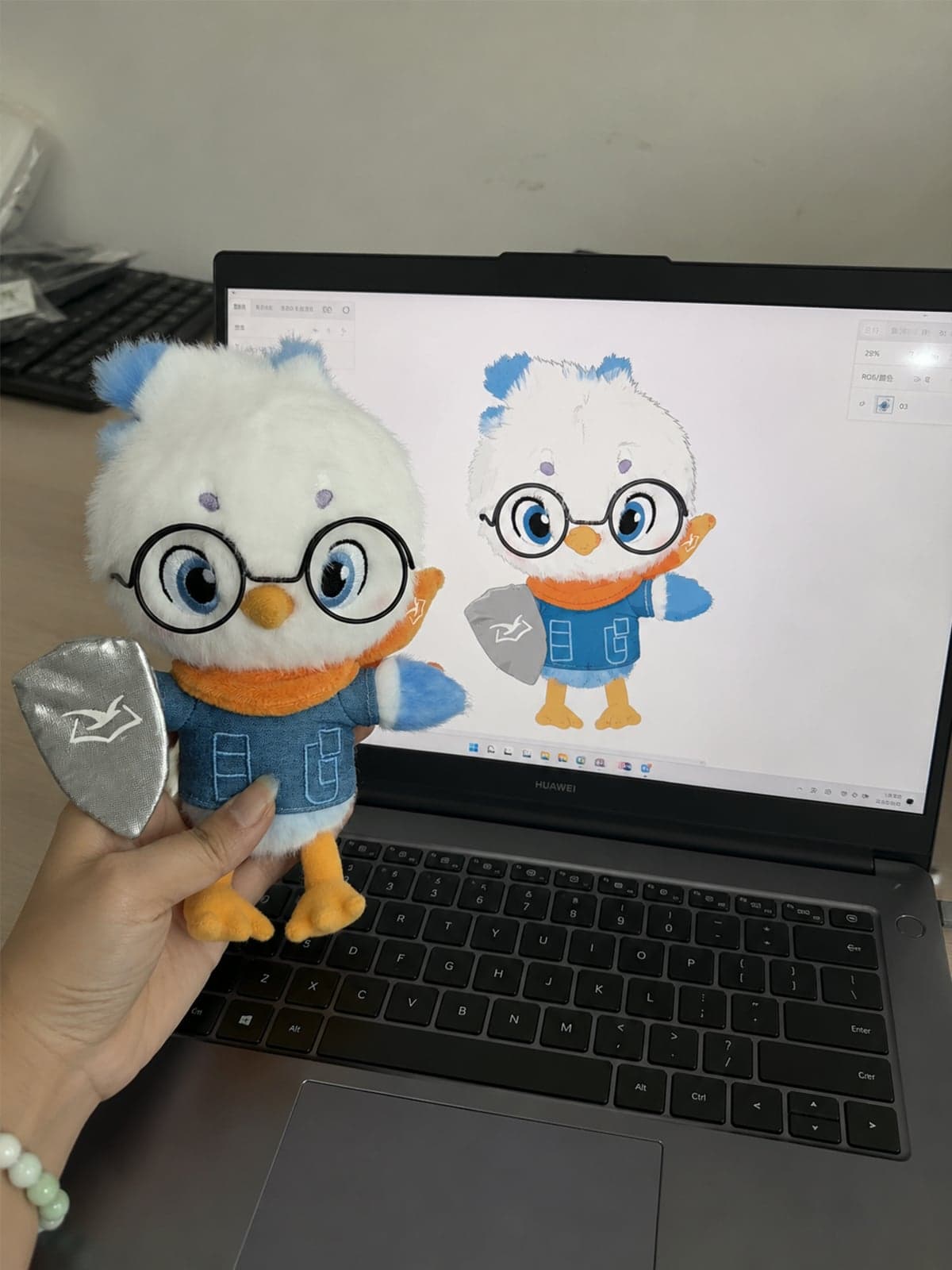
A short tour of our sample and production lines during an active mascot run. Notice how each panel of the pattern moves through a dedicated sewing station before the body is closed and the head is fitted.
By the numbers
Ready to brief a mascot plush?
Mascot plush programs reward early starts and tight briefs. If you have an event date, work backwards from it through the 16-week countdown above; if you have a retail launch, lock the size mix and decoration method first; if you have a licensed character, get the licence letter into our hands before the kickoff call.
When you're ready, you can send your mascot brief to our OEM team or browse our customer case gallery to see how mascots from other clients turned out — keychain runs, retail launches, conference giveaways, sports team kits.
Preguntas frecuentes
What is the ideal size and MOQ for custom mascot plush toys for sports teams?
How do you translate a 2D sports mascot logo into a 3D plush design?
What is the production timeline for a sports mascot plush launch?
Can sports brand mascot plush meet retail safety and licensing requirements?
What is the cost range for custom sports team mascot plush in bulk?
¿Listo para crear tu propio peluche personalizado?
Cuéntanos tu proyecto y recibe un presupuesto directo de fábrica en 1 hora laborable.