中国からのぬいぐるみ輸送・輸入:着地コスト実践ガイド
ぬいぐるみが通常の運賃計算を崩す理由(重量ではなく容積で決まる)、買い手向けインコタームズ、海上 vs 航空、コンテナCBM、米国・EUの通関と関税、真の着地コストの計算方法。

You negotiated a great FOB price — and then the freight, duty and customs paperwork quietly added 30–60% to your true cost per piece. Plush is unusual: it's light but bulky, so it breaks the freight math importers learn on every other product. This guide is the landed-cost playbook from the factory that actually packs the cartons: Incoterms, ocean vs air, container volume, US and EU customs, and how to add it all up.
Why plush breaks normal freight math
Most products are weight-limited; plush is volume-limited. A 40-foot container can legally carry 20-some tonnes, but a container of plush fills up on space long before it gets heavy — you're essentially paying to ship air. Two consequences follow:
- Air freight is brutal for plush. Carriers bill the greater of actual and volumetric weight (length × width × height in cm ÷ 6000). A 40 kg carton of teddy bears measuring 250×130×120 cm computes to 650 kg chargeable — you pay for 650, not 40.
- Sea freight is a CBM game. Your cost per piece is driven by how many pieces fit in the container, which is a volume (cubic metre / CBM) question — so the single highest-leverage cost move is compression or vacuum packing, which shrinks CBM and fits more plush per container.
Incoterms for plush buyers
Incoterms 2020 (published by the ICC) define who pays for and who bears the risk of each leg of the journey. The matrix below shows the handoff for the rules that matter to plush buyers (S = seller, B = buyer).
| Stage | EXW | FCA | FOB | CIF | DAP | DDP |
|---|---|---|---|---|---|---|
| Export packing & loading at factory | S | S | S | S | S | S |
| Haulage to origin port | B | S | S | S | S | S |
| Export customs clearance | B | S | S | S | S | S |
| Main freight (sea / air) | B | B | B | S | S | S |
| Insurance | B | B | B | S (min) | B | B |
| Risk transfers at | Factory | Carrier | On vessel | On vessel | Destination | Destination |
| Import clearance & duties | B | B | B | B | B | S |
| Last-mile delivery | B | B | B | B | S | S |
Which should you pick? A first-time importer with a trusted freight forwarder is usually best on FOB — a clean risk handoff once goods are on the vessel, with you controlling the main freight and customs. EXWis the worst starting point (you inherit Chinese export formalities you can't easily access). DDP looks effortless, but from an unknown supplier it can hide margin and create mis-declaration risk — choose it only with a vetted partner.
Ocean vs air — and how much plush actually fits
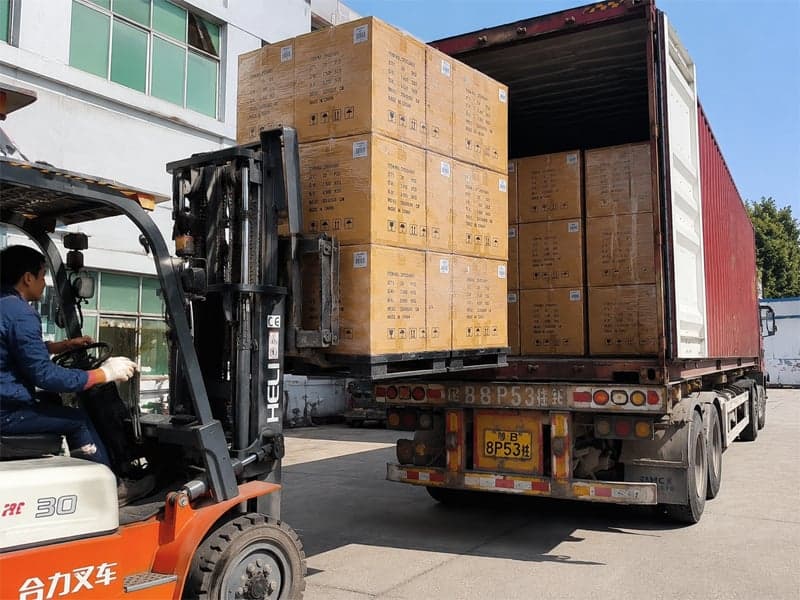
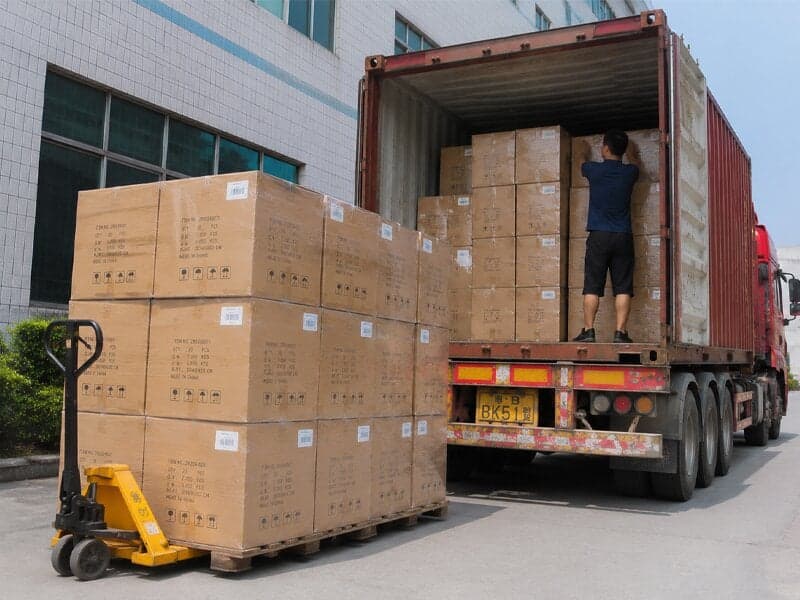
For bulk plush, sea wins almost every time; reserve air for samples, pre-orders and urgent restocks. Within sea, the choice between LCL (sharing a container) and FCL (your own container) is a CBM decision — as a rough rule, under ~13–15 CBM lean LCL, above it an FCL is usually cheaper per piece. Here is the practical loadable volume of each container:
| Container | Nominal internal | Practical loadable CBM | Plush reality |
|---|---|---|---|
| 20 ft | ~33 CBM | ~25–28 CBM | Fills on volume; weight limit rarely reached |
| 40 ft | ~67 CBM | ~54–58 CBM | Best value for mid-volume plush runs |
| 40 ft High Cube | ~76 CBM | ~60–68 CBM | Most plush per container — the usual choice for bulk |
US customs & duties
Stuffed toys classify under HTS heading 9503, and the base (Column 1 General) duty for stuffed toys is free — 0%. That is the stable part. The moving part is the China stack on top: Section 301 duties and, at various times, temporary emergency tariffs.
Because US tariff policy on China-origin goods changes frequently, do notbudget from a fixed total rate you read in any article (including this one). Confirm the live rate on hts.usitc.gov and with your customs broker at the time you import. Beyond duty you'll also owe the Merchandise Processing Fee (and Harbor Maintenance Fee on ocean), need a customs bond, and must file an Importer Security Filing (“10+2”) at least 24 hours before vessel loading. Your plush must also meet ASTM F963 and ship with a Children's Product Certificate — see our safety standards guide.
EU customs & duties
A common myth is that toys enter the EU duty-free. For plush they don't: the correct CN code for stuffed toys representing animals or non-human creatures is 9503 00 41, which carries a 4.7% third-country duty (verify on EU Access2Markets), plus import VAT at your member state's rate. You'll need an EORI number as importer of record, and customs or market-surveillance authorities can demand your CE marking and EN 71 / Toy Safety Directive documentation at any time.
Calculating true landed cost
The honest cost of a plush toy on your shelf is:
With plush, the freight term in that equation is dominated by CBM — which is exactly why packing efficiency, not just the quoted unit price, decides your margin. Run the full stack before you commit to a program.
- 1Factory quoteUnit price + Incoterm + CBM/carton
- 2Pick IncotermFirst-timer → FOB; vetted DDP optional
- 3Choose freight modeBulk → sea (LCL/FCL); urgent → air
- 4Clear customsUS: HTS 9503 + 301 (check!) + ISF · EU: 9503 00 41 4.7% + VAT
- 5Add it all upUnit + freight + duty + fees + last-mile
- 6Landed cost ÷ unitsTrue cost per plush
8 costly importing mistakes
- Assuming “toys are duty-free.” US base is 0% but Section 301 applies; EU plush is 4.7%.
- Budgeting from a fixed tariff total instead of checking the live rate at import.
- Shipping bulk by air and getting crushed by volumetric weight.
- Skipping compression packing and paying for half-empty containers.
- No or late ISF on US ocean freight (fines up to $5,000 per violation).
- Under-declaring invoice value — fraud exposure, penalties, seizure.
- Using the wrong HTS/CN code (e.g. the dolls line 9503 00 21 for plush) and mis-paying duty.
- Taking DDP from an unknown supplier and overpaying hidden margin with mis-declaration risk.
Ship it landed-cost-smart
We quote FOB with CBM-per-carton transparency, advise on compression packing, and prepare the commercial invoice, packing list and test reports your broker needs. Tell us your destination and channel on our contact page, pair this with our packaging & export guide, or browse real shipped orders in our customer case portfolio.