How to Manufacture a Blind-Box Plush Series (The Pop Mart Era)
Designing a collectible blind-box plush series from the factory side: style line-ups, secret/chase ratios, weight & size parity, per-style QC, assortment packing, IP protection and the higher MOQ math.

Blind-box plush turned a soft toy into a collectible habit. The surprise mechanic, the chase for a rare “secret,” and the social-media unboxing ritual drive repeat purchase in a way a single plush never could. But manufacturing a seriesis a different discipline from making one toy — you're engineering consistency, rarity and assortment across a whole line-up. Here's how it works from the factory floor.
Why blind-box plush exploded
The model works on variable reward: you don't know which style is inside, so the next box is always tempting, and a rare chase variant turns “buy one” into “collect the set.” The Pop Mart / Labubu boom of 2024–2025 pushed plush blind boxes from a niche into a global phenomenon, with the plush category reportedly growing many times over year on year. The “wearable collectible” angle — bag charms and keychain blind boxes — added a second viral engine on top.
Designing the series line-up
Three decisions define a series before a single panel is cut:
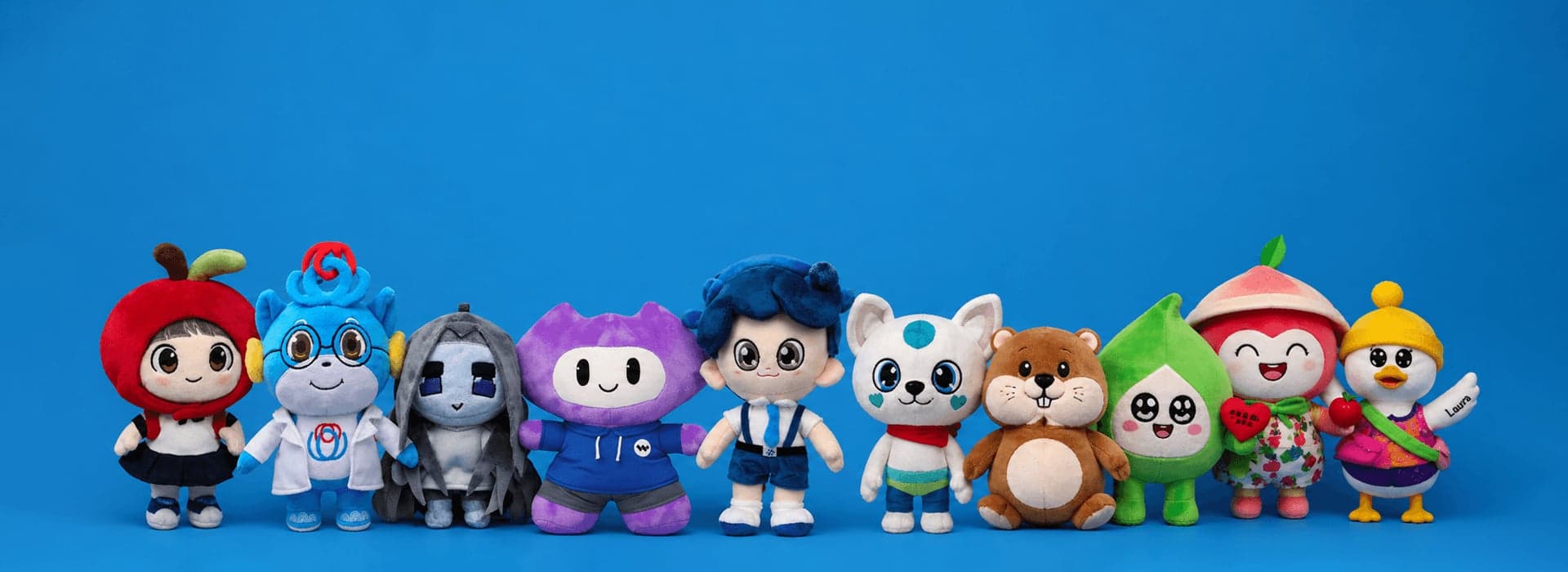
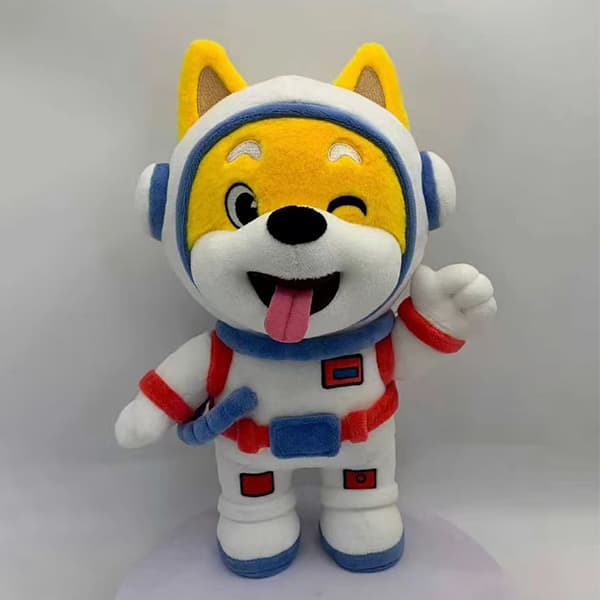
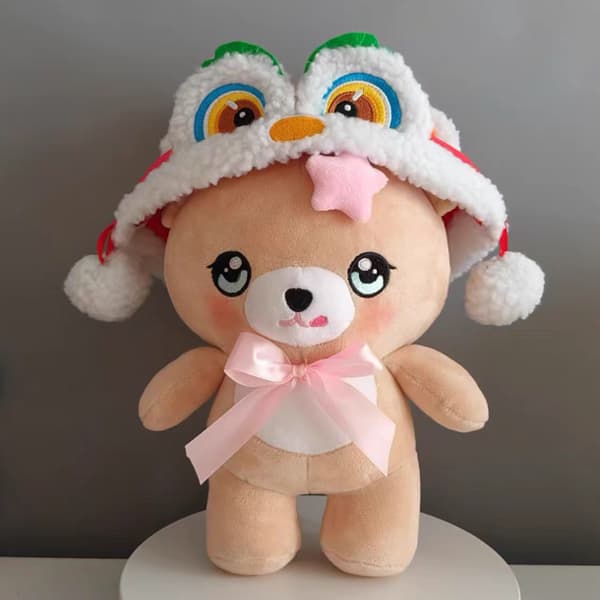
- How many styles. 6–12 standard styles plus one secret is the sweet spot. Six is the floor for collect-the-set appeal; past twelve, MOQ and tooling balloon.
- The secret/chase ratio. Commonly 1:72 or 1:144 (one or two per master carton); a super-secret can run as rare as ~1:288. The rarity is a packing decision, set during assortment.
- Parity. Every style must share size, format and weight so a buyer can't feel or shake out the rare one — the single hardest constraint of a blind series.
What changes on the factory floor
A normal plush run cuts, embroiders, fills, sews, inspects and packs one design. A blind-box series adds four layers a single SKU never needs:
- Cross-style consistency — a shared body block, standardised fill weight and locked dimensions so every style matches.
- Per-style QC — each of the N styles inspected against its own spec, plus a parity check across styles, not one inspection for one SKU.
- Blind packing — each unit sealed in an opaque polybag with tamper and weight uniformity.
- Assortment / case-pack ratios — mixed master cartons built to hold the correct style mix with the secret inserted at its set ratio.
| Dimension | Single-SKU plush | Blind-box series |
|---|---|---|
| Designs to tool | 1 | 6–12 + 1 secret |
| Tooling & sampling | One set of patterns/dies | Per-style patterns, dies, samples (multiplied) |
| Total MOQ | Lower (one design) | Higher (sum across styles) |
| QC | One spec | Per-style spec + parity check |
| Critical constraint | Quality to spec | + size/weight parity so the box stays blind |
| Packaging | Polybag or box | Opaque blind bag → printed box → display carton |
| Barcodes | One | Per style and per series |
| Carton packing | Uniform | Mixed assortment at set ratio incl. secret |
Blind packaging & assortment
Blind-box packaging is layered: an opaque sealed inner polybag, a printed individual box, and a display / PDQ outer carton that's retail-ready. Each style gets its own barcode, and the series gets one too, so retailers and marketplaces can track both. A series art card or collector checklist inside each box drives set-completion — the engine of repeat purchase. The assortment step is where the secret ratio is physically realised: cartons are packed to the exact style mix, with the chase dropped in at 1:144 (or whatever you set).
IP, licensing & counterfeits
Collectibles live and die on IP. Whether your characters are original or licensed, protect them with the right mix of copyright (the character art), trademark (the brand and series name) and design rights (the 3D form). For international design protection, the WIPO Hague System (which the USPTO participates in) lets you register an industrial design across many countries in one filing. Hot collectibles attract counterfeits fast, so a compliant, contracted factory that signs IP-assignment and NDA terms is part of your protection — see our OEM vs ODM guide on who owns the IP.
MOQ & cost reality
The headline number that surprises first-time series buyers: a blind-box series has a higher total MOQ than a single plush, because you're tooling and producing several styles at once. Each style carries its own patterns, cutting dies, embroidery/print setup and sample fee, and all styles must run in balanced quantities so your assortment works. Budget the series as the sum of viable per-style runs, plus the per-style sampling — not as one SKU. For the underlying cost mechanics, see our cost & pricing guide.
- 1Series concept & IPTheme, characters, rights cleared
- 2Line-up + secret ratio6–12 styles + 1 secret @ e.g. 1:144
- 3Parity lockBody block, fill weight, box size standardised
- 4Per-style tooling & bulkDies, embroidery setup; cut/sew/fill all styles
- 5Per-style + parity QCEach style to spec; cross-style match
- 6Blind pack → assortmentOpaque bag → box; mixed carton + secret at ratio
- 7Compliance & shipASTM F963 / EN 71, display carton, series barcode
Collectibles are still toys
Even when a series targets adult collectors, a plush is legally a toy. It must meet ASTM F963 (mandatory in the US) and EN 71 in the EU, pass small-parts and flammability requirements, and the opaque blind bag itself must carry a suffocation warning. Counterfeit collectibles routinely skip all of this — another reason buyers value the real thing. The full testing breakdown is in our safety standards guide.
Build your series with StarDream Toys
We tool and produce parity-matched plush series, pack the assortment to your secret ratio, and certify the line to ASTM F963 / EN 71. Bring your concept and rights to our contact page, see character work in our customer case portfolio, or start upstream with our plush design & tech-pack guide.
よくある質問
How many styles should a blind-box plush series have?
What is a 'secret' ratio and what's standard?
Why is the MOQ for a blind-box series higher than for one plush design?
How do you stop people feeling or shaking the box to find the rare one?
Collectibles are aimed at adults — do toy safety rules still apply?
オリジナルぬいぐるみの製作を始めませんか?
ご計画の内容をお聞かせください。営業時間内であれば1時間以内に工場直送のお見積りをお送りします。