Riesen- & Jumbo-Plüschtiere herstellen: Konstruktion, Füllung, Sicherheit & Versand
Warum ein Riesen-Plüsch eine andere Fertigungsdisziplin ist, nicht nur ein größeres Schnittmuster: Innenstruktur und Schaumkerne, Nahtspannungs-Skalierung, Füll-Ökonomie, Sicherheit bei Größe und die CBM-/Kompressions-Versandmathematik.

Doubling the height of a plush toy does not double the difficulty — it multiplies it. A giant plush has to hold its own shape, survive far higher seam stress, swallow kilograms of fill, and somehow fit economically into a shipping container. Retail listings show you the finished 2-metre bear; this guide shows you the engineering and logistics behind it, from the factory bench.
What “giant” actually means
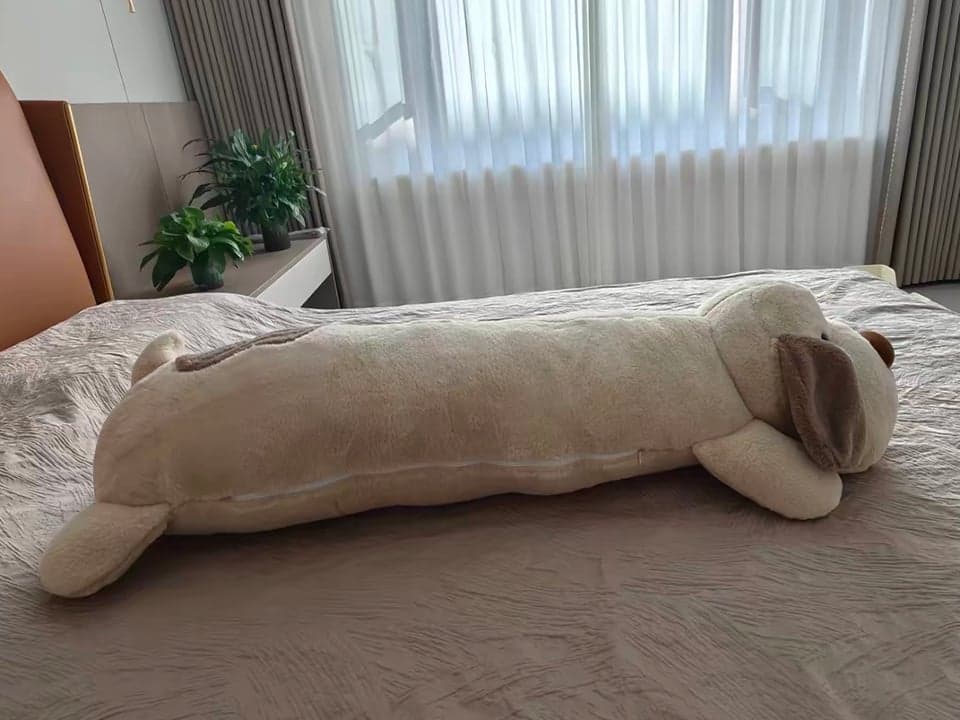
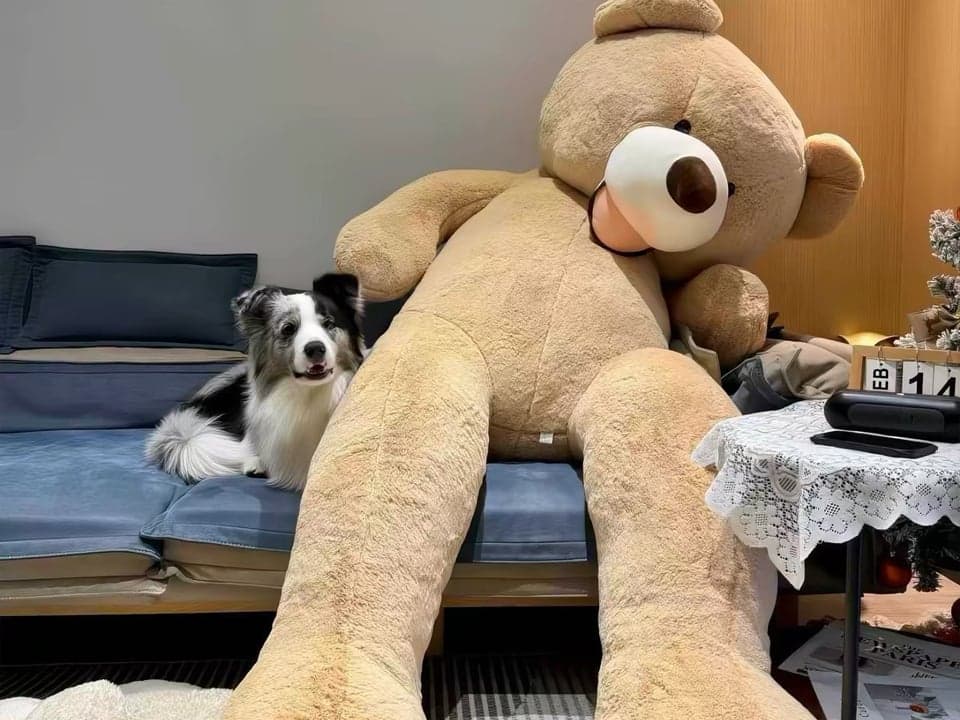
Size brackets vary by vendor, but a working reference: large ≈ 40–60 cm, giant ≈ 1–1.5 m, and life-size / jumbo at 2 m and up. Real datapoints help calibrate weight: a ~137 cm (54-inch) fibrefill bear weighs around 8 kg, and a ~229 cm (7.5-ft) bear around 10 kg. Treat all such figures as illustrative — finished weight depends heavily on fill density and construction.
Engineering an oversized plush
This is the part the product photo never shows:
- Internal structure / armature. Pure fibrefill can't hold a tall silhouette, so large floor-standing pieces use firm PE-foam blocks or a foam core for structural areas, with fibrefill around them. A sitting pose is inherently more stable than a standing one.
- Base weighting. Weighted pellets in the base or seat keep a seated giant balanced and resistant to tipping.
- Seam-stress scaling. Bigger panels hold more fill mass, which puts far more tension on every seam — so reinforced or double stitching isn't a nicety at this size, it's structural.
- Zoned fill density. Firmer torso, softer face and limbs, so the piece holds its shape without looking over-stuffed.
Fill: the hidden cost driver
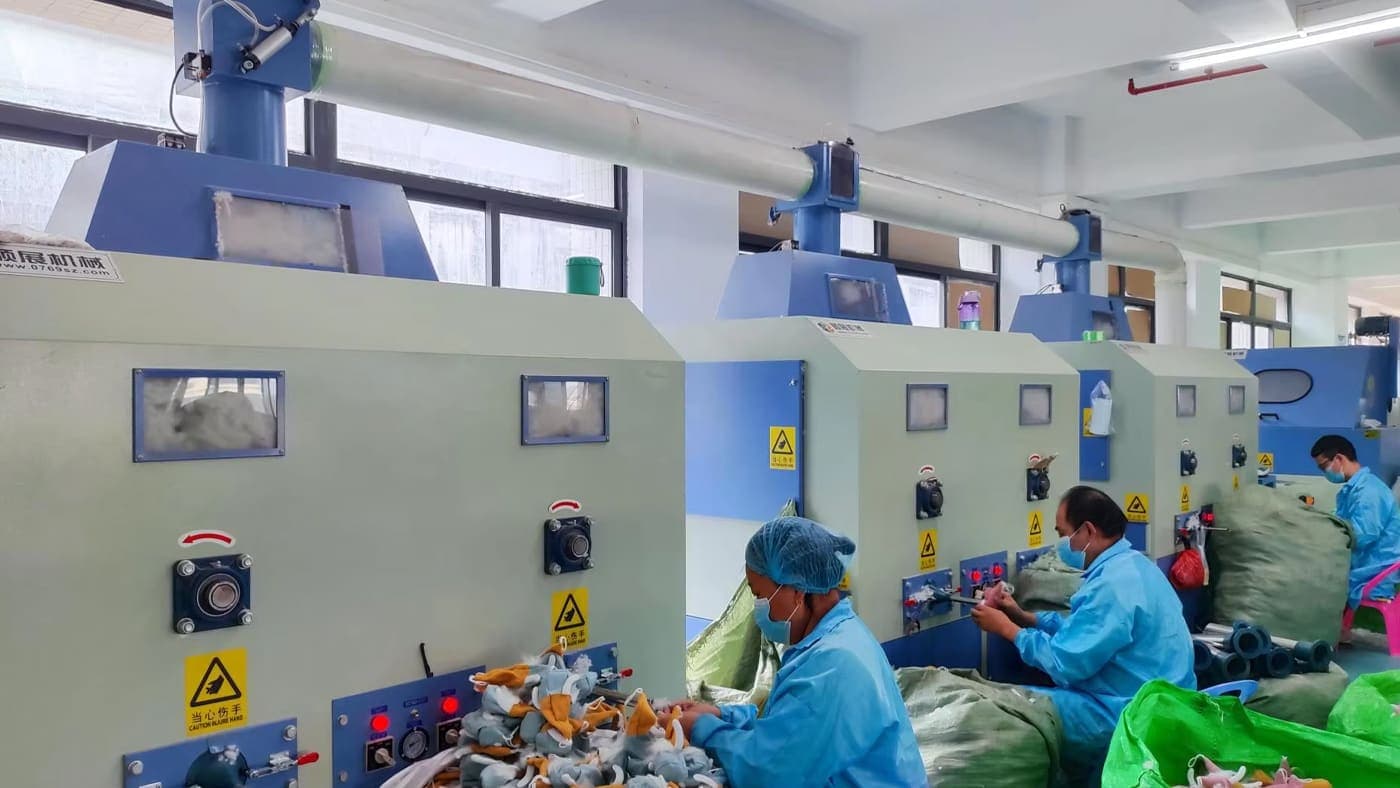
Polyester fibrefill (“PP cotton”) is the industry standard — cheap, springy, durable, hypoallergenic and good at holding shape (see polyester fibrefill). But at jumbo volume, fill becomes a dominant costbecause you need kilograms of it. That's the dual reason a foam core is used at scale: it cuts the fibre you'd otherwise pay for and holds structure better. The trade-off is feel — more fibre is softer and more huggable, more foam is firmer and more structural. Recycled fibre is available for eco programs; see our fabric & materials guide.
| Tier | Approx. size | Approx. fill weight* | Internal structure | Shipping note |
|---|---|---|---|---|
| Large | ~40–60 cm | ~0.3–1 kg | Pure fibrefill | Normal cartons / LCL |
| Giant | ~1–1.5 m | ~3–8 kg | Fibrefill + partial foam | Compression recommended; CBM matters |
| Life-size / Jumbo | 2 m+ | ~9–15 kg+ | Foam core + armature + weighted base | Vacuum-pack & re-loft; freight may exceed unit cost |
*Fill weights are estimated ranges anchored to retail datapoints (54-inch ≈ 8 kg, 7.5-ft ≈ 10 kg) and vary with density and construction.
Fabric at scale
Big panels expose problems small ones hide. Pile direction must run consistently across every large panel, or the nap shows mismatched under display lighting. Dye-lot matching matters because a single giant may consume fabric across multiple bolts, risking a visible colour shift. And fabric weight (GSM) adds up fast on a 2-metre body, affecting both finished weight and seam load.
Safety when the toy is huge
Giant plush often blurs the line between toy and décor — but if a child can plausibly play with it, treat it as a toy: ASTM F963 (US) and EN 71 (EU) still govern small parts, seam abuse and choking. Two hazards are amplified by size: tip-over (a toddler under a fallen 2-metre plush — hence base weighting and stability design) and fire load (a large soft polyester item is a meaningful amount of flammable material, governed by 16 CFR 1610 textile flammability). Children's products still need CPSIA tracking and third-party testing. The full breakdown is in our safety standards guide.
Shipping: the make-or-break math
This is the issue that decides whether a giant-plush program is profitable. Giant plush is extreme volume-to-weight, so CBM volume governs the freight bill, not actual weight, and air freight is effectively off the table. The lever is vacuum / compression packing: we compress for shipping to control CBM, and the piece re-lofts at destination — but only if fill density and fabric resilience are validated first, so we compression-test before committing, and ship re-fluffing instructions for the end customer. Because freight can rival or exceed unit cost here, choosing the right Incoterm and packing plan matters as much as the make — see our shipping & landed-cost guide.
- 1Concept & briefCharacter, size target, use case
- 2Scale & pose decisionSitting vs standing; toy vs display
- 3Internal structure designFoam core / armature / weighted base
- 4Fill planZoned density; foam-to-fibre ratio; kg estimate
- 5Seam reinforcementScaled to fill mass
- 6Safety routingToy → F963/EN71 · display → flammability/stability
- 7Compress, ship & re-loftVacuum-pack, CBM-optimise, fluffing instructions
MOQ, pricing & lead time
Because each giant unit is expensive, MOQs are typically lower than for standard plush, while unit price is higher and lead time longer — roughly 30–45 days of production after sample approval, with samples in about a week. Structure-heavy standing poses add time for armature and stability work. Common buyers: claw- machine and arcade operators (durability matters most), retail hero displays, brand activations and photo-op installations, oversized gifts, and nursery décor.
Build something oversized
Tell us the character, the size and whether it's a toy or a display piece, and we'll engineer the structure, plan the fill, and design the compression-and-re-loft shipping so it arrives intact and on budget. Start on our contact page, browse our customer case portfolio, or design the character first with our tech-pack guide.