The Complete Plush Toy Size Guide: From Keychain Minis to Giant Plush
A plush size chart that actually helps — named size classes in cm and inches, how plush is measured (seated vs standing), how size drives cost and shipping, safety by size, and how to choose.

“What size should it be?” sounds simple until you realize a “12-inch bear” can mean three different things, that doubling the height more than doubles the cost, and that a giant plush ships for several times the freight of a standard one. This is the size guide that goes past the conversion chart: the classes, how they're measured, what size does to your cost and shipping, and how to pick the right one.
Plush sizes at a glance (and why there's no official standard)
First, the honest caveat the chart pages skip: there is no industry-standard size taxonomy. Makers name and bound these classes differently, so treat the ranges below as a common convention with overlapping edges, not fixed thresholds.
| Class | Approx. cm | Approx. inches | Typical use |
|---|---|---|---|
| Micro / charm | ≤ ~10 cm | ≤ ~4 in | Keychain, bag charm |
| Mini | ~10–20 cm | ~4–8 in | Claw machine, blind box, pocket |
| Small | ~20–30 cm | ~8–12 in | Shelf, desktop |
| Standard / medium | ~30–45 cm | ~12–18 in | Best-selling gift / e-commerce |
| Large | ~45–70 cm | ~18–28 in | Premium gift, hug-size |
| Jumbo / giant | ~70–150 cm | ~28–59 in | Display, photo prop |
| Life-size | 150 cm+ | 60 in+ | Specialty / statement |
How plush is actually measured
This is the gap every conversion chart leaves. The same toy can be honestly listed at two different numbers:
- Standing height — crown (top of head) to heel, upright. Measure from the crown, not the ear tips — measuring to ears inflates the number.
- Seated height — crown to base when sitting; typically ~15–25% shorter than standing because the legs fold.
- Length — nose to tail, for long-body forms (snakes, dachshunds, draft-stoppers).
Best practice: publish bothheights, state the pose, and say whether ears, horns or tails are counted (usually excluded). Measure a fully production-stuffed sample, not an under-filled draft — dense fill pushes the fabric outward (“stuffing drift”), so expect small tolerances.
Size by use case
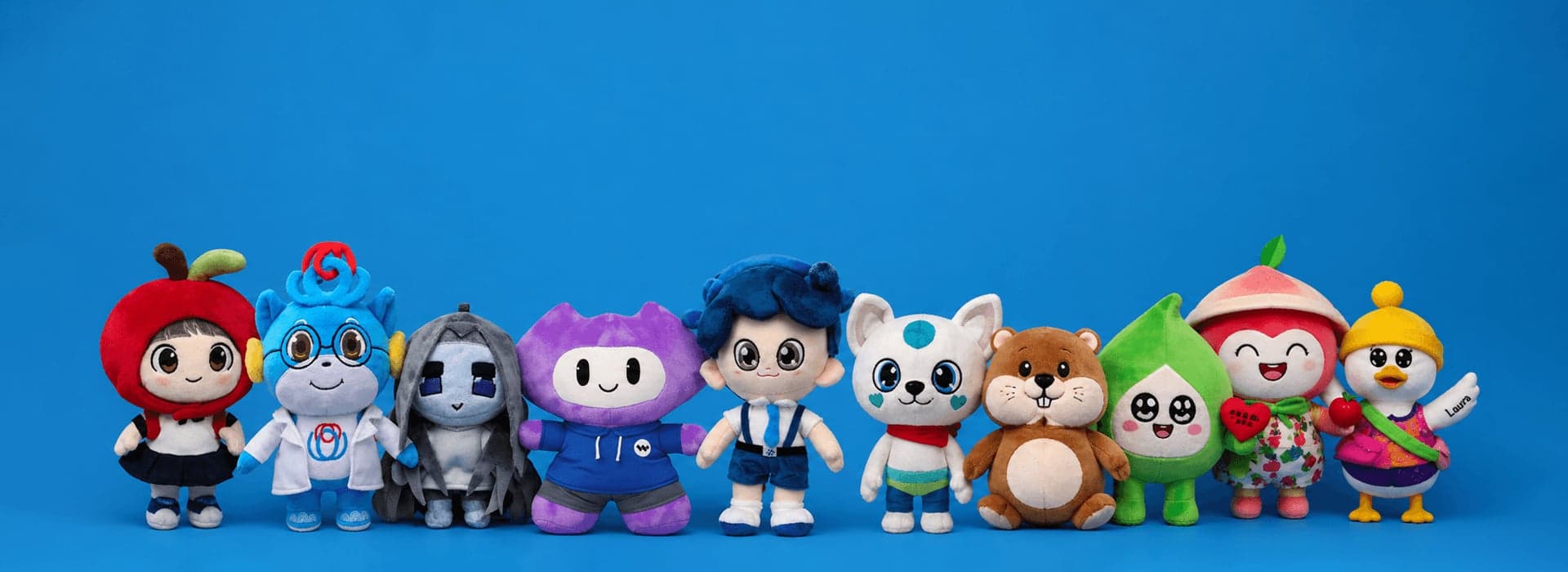
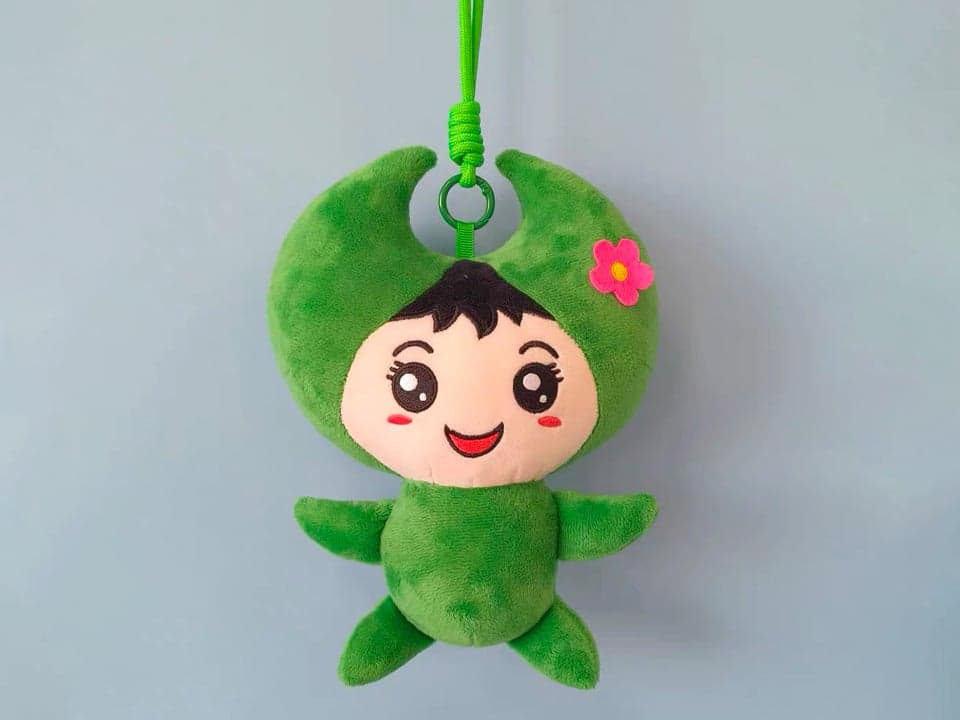
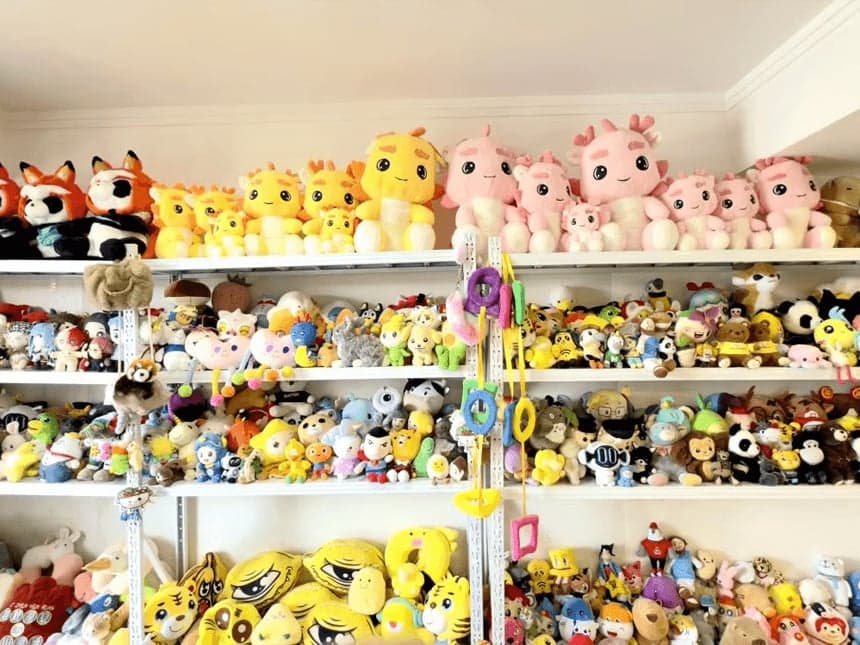
Each band maps to an audience and a channel — from impulse charm to display centerpiece:
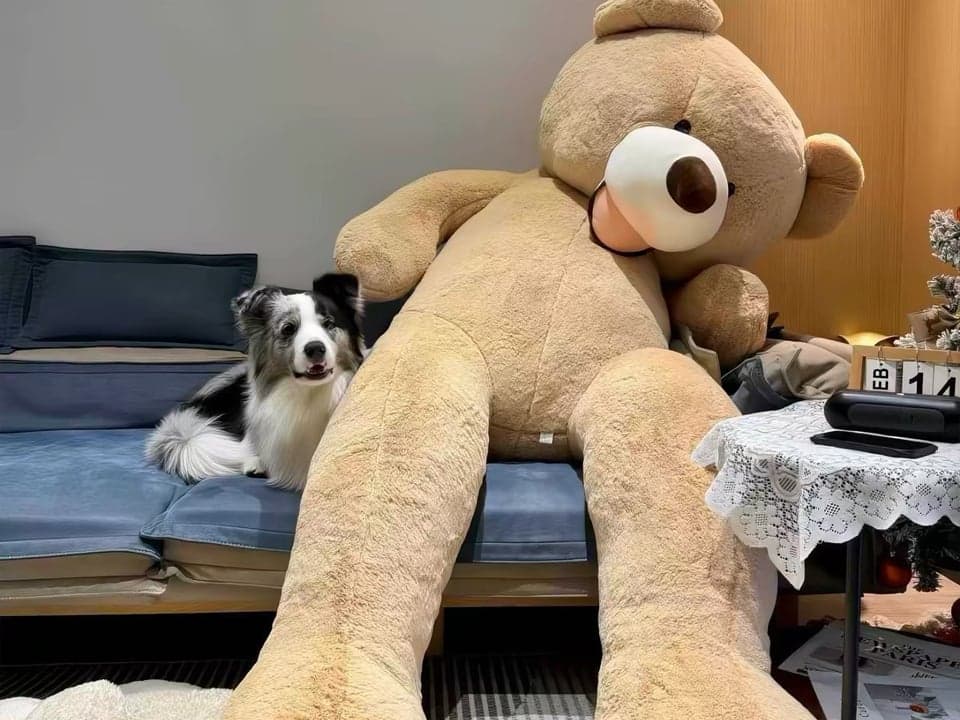
The extremes have their own deep dives — our keychain & mini plush guide and giant & jumbo plush guide cover the design and economics at each end.
What size does to cost & shipping
Two things scale with size, and neither is linear. Material and labor grow with surface area and volume, so doubling height can more than double the cost. And shipping is billed on dimensional (volumetric) weight — length × width × height ÷ a DIM factor (commonly 6000 for air) — because plush is light but bulky. Fewer units fit per carton as size grows, so per-unit freight climbs fast:
| Size | Units per carton | Relative unit cost | Relative freight / unit |
|---|---|---|---|
| ~15 cm mini | Many (100+) | Lowest | Lowest |
| ~30 cm standard | Moderate (~40) | Low–mid | Mid |
| ~50 cm large | Few (~8) | Higher | High |
| Jumbo / giant | Very few | Highest | Very high (ships by volume) |
It's why big plush is often shipped vacuum-compressed and by sea — see our packaging & export guide and shipping guide.
Safety by size
Size changes the safety question. For small plush and any toy for under-3s, the risk is detachable small parts and small whole toys: the US small-parts rule (16 CFR 1501) bans anything that fits the small-parts test cylinder in a toy for children under 3, and EN 71-1 requires the same — so baby plush use embroidered features and no loose accessories. For giant plush, the concerns shift to weight, stability (it can tip onto a toddler) and fill migration. The full picture is in our baby-safe plush guide.
How to choose the right size
Work through it in order: use case → audience & age → sales channel → budget & MOQ → shipping cost. A keychain for impulse and giveaways; ~30 cm for the core gift or e-commerce hero; large or jumbo for a premium or display piece. The proven move is to launch with two or three sizes and scale the winners — because every extra centimetre costs disproportionately more to make and to ship.
Get the size right
Tell us your use case and channel and we'll recommend the sizes that sell, with honest cost and freight for each. Start on our contact page, request a sample, or browse our customer case portfolio.
자주 묻는 질문
How are plush toys measured?
What's the most popular plush size?
What size plush should I make for my brand?
Is a small plush safe for a baby?
Why is a giant plush so expensive to ship?
나만의 커스텀 인형 제작을 시작해 보세요
계획 중인 프로젝트를 알려주시면 영업시간 기준 1시간 이내에 공장 직접 견적을 보내드립니다.