
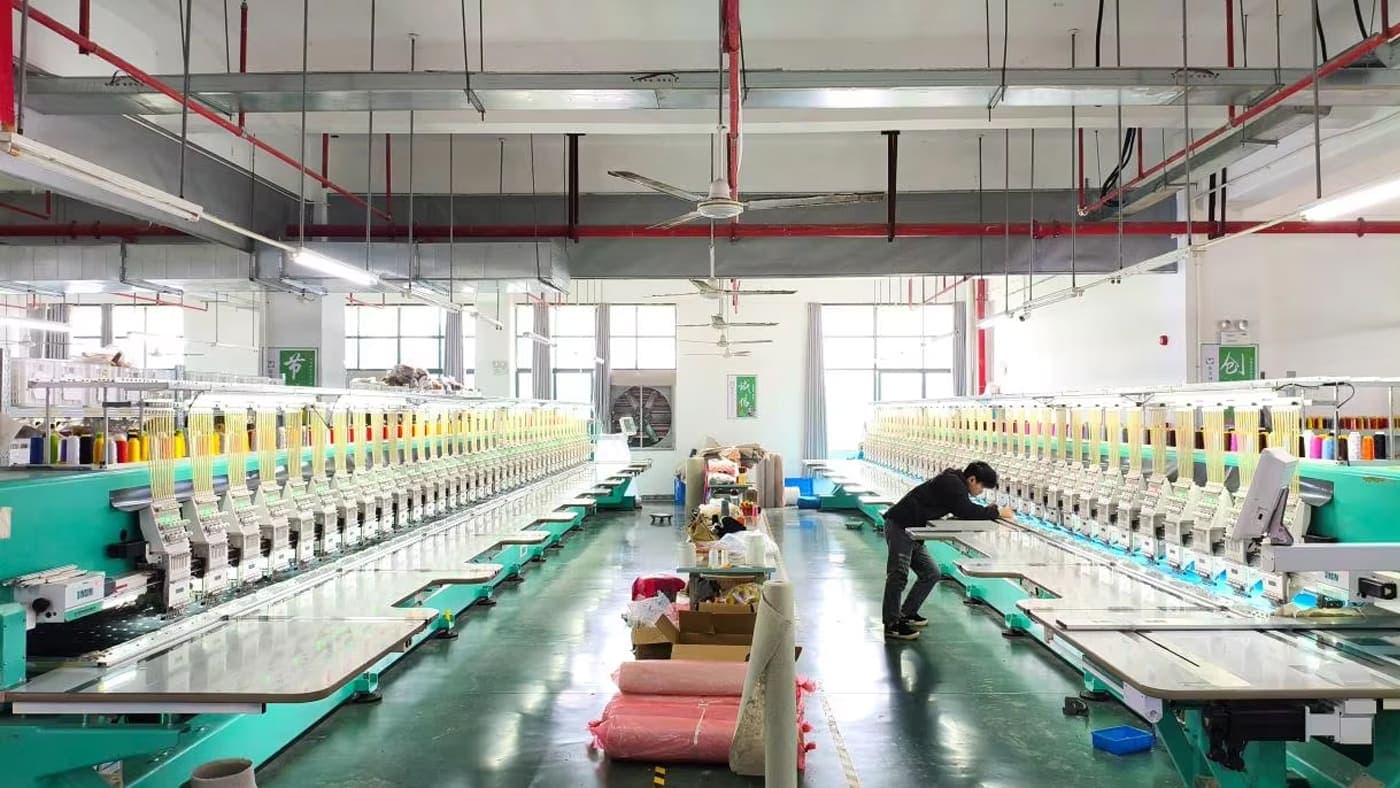
Why embroidery beats prints, patches, and labels
Embroidery is the only branding method that survives a washing machine. Prints fade, heat transfers crack, woven labels tear off. Embroidery is sewn into the plush itself — it lasts as long as the plush does, which on a quality stuffed animal is 8–15 years of normal use.
It also reads as premium. Buyers pick up an embroidered plush and feel the raised thread under their thumb. They know — without being told — that someone took the time to make it. That perception lifts the perceived retail value by 30–50%, which is why every high-end licensed plush brand uses embroidery for the brand mark.
Stitch types — what each one looks and costs like
Different stitch types give different visual effects and have different cost implications. We help you pick the right one for each element of your design:
- Satin stitch — smooth, raised, premium feel. Best for letters and logos. Higher thread count = higher cost per piece.
- Fill stitch (tatami) — flat coverage for large solid areas. Most economical for big shapes; ~30% lower thread cost than satin for the same area.
- Running stitch — outlines and fine detail. Cheapest stitch type. Great for design borders and small line work.
- Motif / applique — fabric patch sewn onto plush, embroidered around the edge. Best for very large brand marks or photographic designs where direct embroidery would cost too much.
- 3D puff embroidery — foam under the stitch raises the design 2–3mm. Highly tactile; reads as premium. ~50% more expensive than flat satin.
Digitising — the most-skipped step that ruins embroidery quality
An embroidery machine doesn't read a JPG or PNG. It reads a digitised file (.DST, .PES, .EXP) that tells each needle where to plunge, when to change colour, and how to underlay the stitch. A bad digitisation produces puckered fabric, gaps between stitches, and thread breaks on the production line. A good digitisation produces a smooth, dense, lint-free finish that holds up to washing.
We digitise in-house — the file is owned by the project, not licensed from a third party. Free for orders ≥500 pcs; $40–$80 one-time fee for smaller orders. We send you the digitised stitch file so you can use it with other factories too (some clients keep it as IP).
Embroidery placement — where it actually goes on the plush
On a 20cm plush, the chest panel is the prime real estate for a brand mark — visible whether the plush is sitting, standing, or being held. Foot pads work for tag-style "Made for" branding (a common pattern for licensed plush — brand on chest, manufacturer mark on foot). Back panels are fine for secondary branding but are rarely seen. Avoid the face area unless the design is a facial feature.
We send you a virtual mockup of every embroidery placement before sample production. Re-positioning after sample is free; re-positioning after mass production starts is not (we'd need to re-cut).